
Last updated October 15, 2026
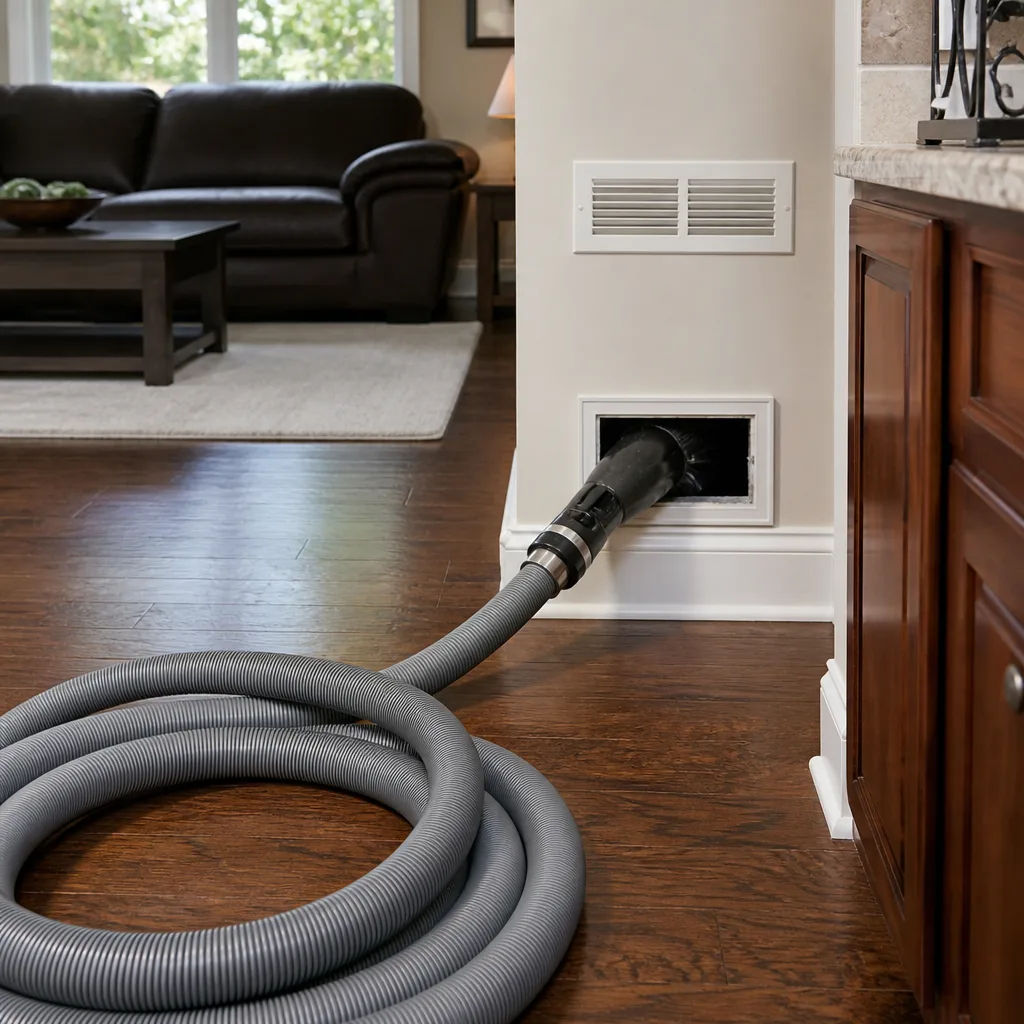 Whole-home duct cleaning
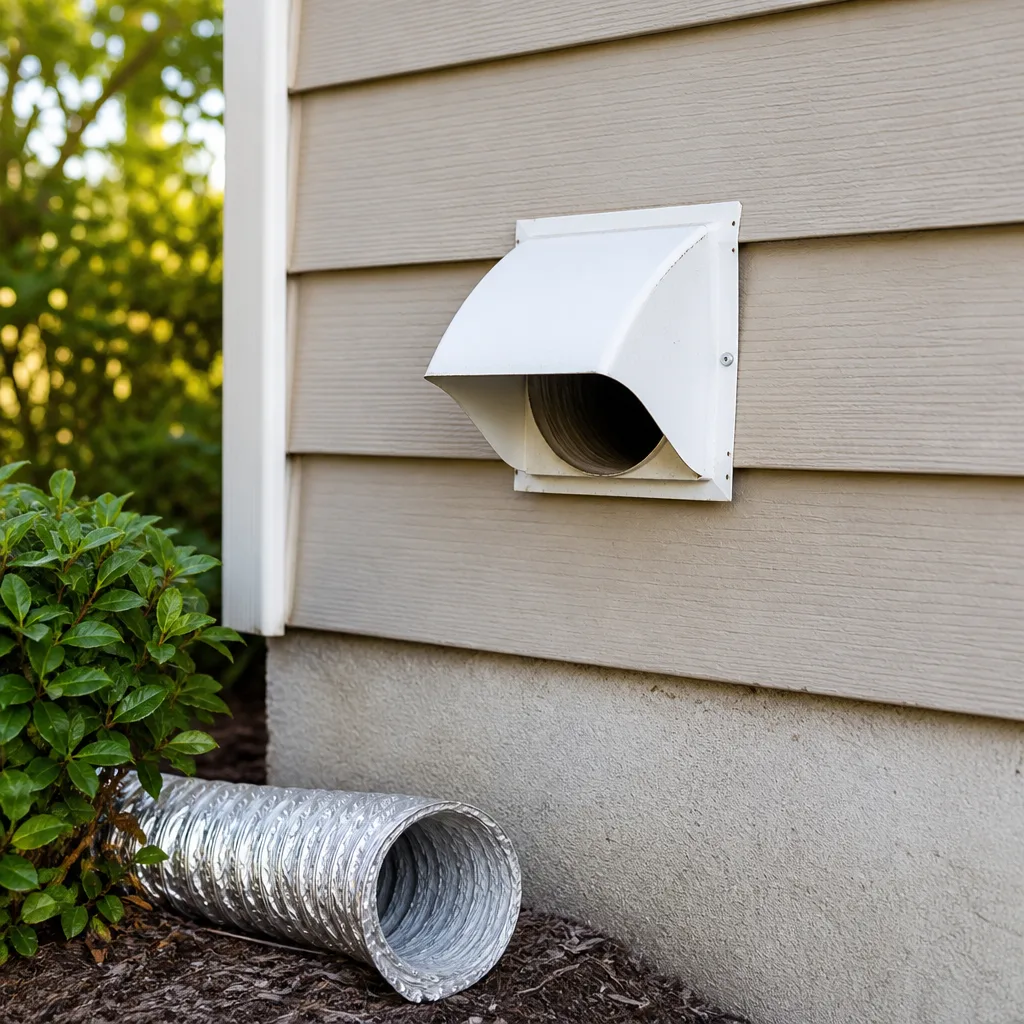 Dryer vent cleaning
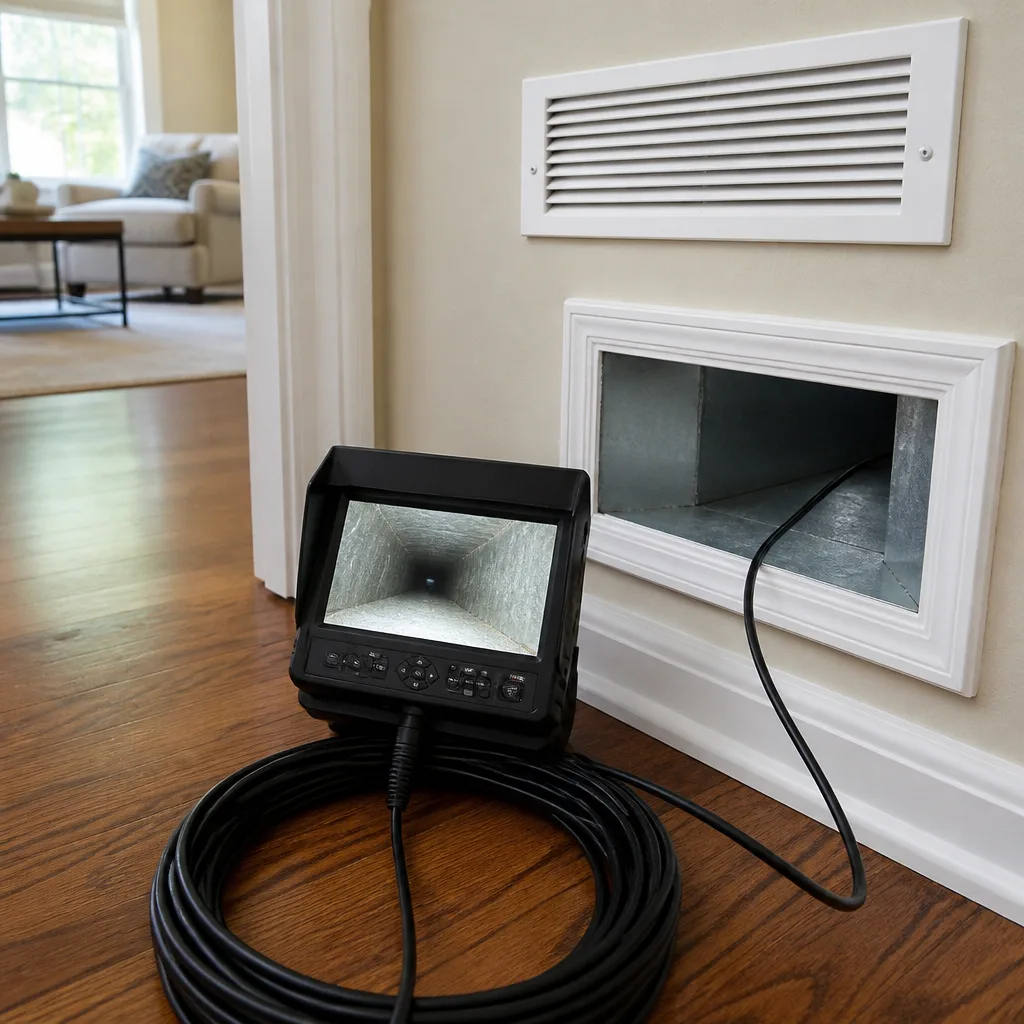 Camera inspection
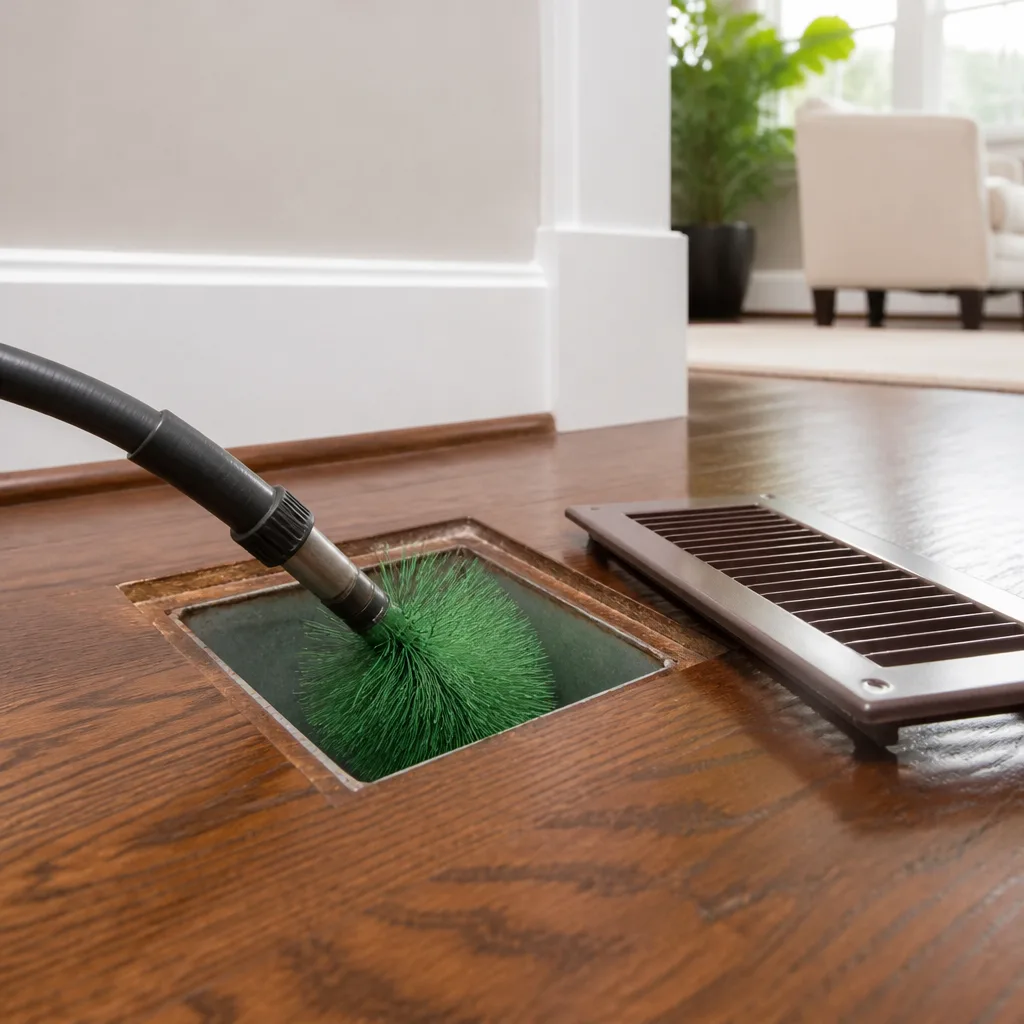 Sanitizing & deodorizing
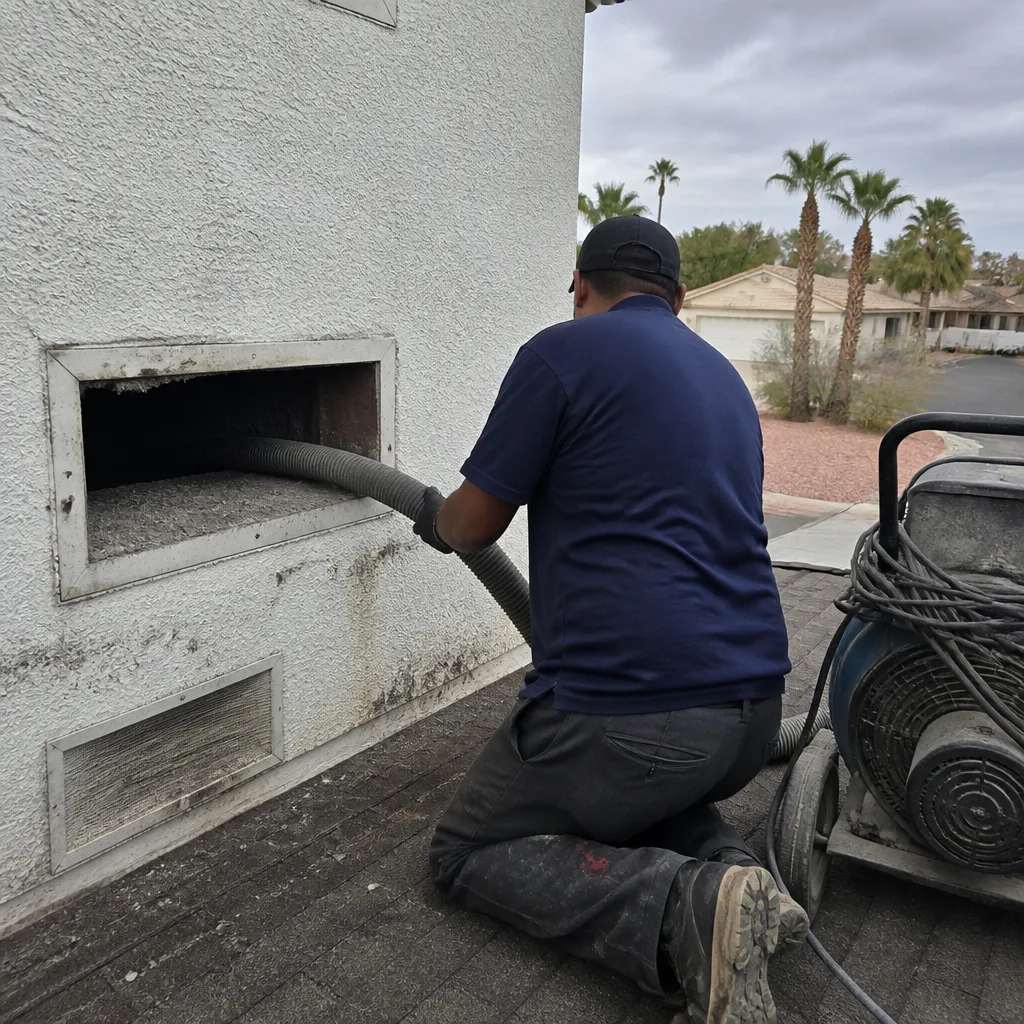
Whole-system duct and dryer vent check with before-and-after photos - you see exactly what came out of your vents
That "$99 whole-house special" is a bait ad - the real number appears once they are in your hallway, or the "clean" is a shop-vac at the register. We photograph the inside of your ducts before and after instead.
DIY vs Professional Air Duct Cleaning: The Las Vegas Homeowner’s Decision Guide
A shop vacuum and a dryer vent brush can genuinely clean the first 12 to 18 inches of a supply duct. The problem is that in a Las Vegas home, the compacted caliche dust that degrades air quality most lives 15 to 40 feet into the main trunk line, well past where any consumer tool can reach or dislodge it. This guide gives you an honest breakdown of what you can actually accomplish yourself, what requires Air Duct Cleaning services, and how to decide which path makes sense for your home and budget.
Styles & brands we work with
Quick Answer
If your Las Vegas home is under 2,000 square feet, your system is less than 10 years old, and your ducts are rigid metal with no sagging or pest history, a careful DIY cleaning of register covers and the first few feet of each duct can help between professional cleanings. But if your home is larger, your system is older, or you have flex duct that has sagged or crimped, the debris that actually affects your air quality sits deep in the trunk line where no consumer tool can reach it, and a professional cleaning with negative-air extraction is the only method that removes it. Most Las Vegas homeowners should plan on a professional cleaning every 3 to 5 years, with light DIY maintenance in between.
Table of Contents
- What DIY Duct Cleaning Can Actually Accomplish
- What DIY Duct Cleaning Cannot Do
- Las Vegas-Specific Factors That Push a Job Into Professional Territory
- The Real Cost Comparison: DIY Supplies vs Professional Cleaning
- How to Do a DIY Duct Inspection Before You Decide
- How Professional Air Duct Cleaning Actually Works
- Maintenance Between Professional Cleanings
- Common Mistakes to Avoid
- When to Call a Professional
- Frequently Asked Questions
- The Bottom Line
What DIY Duct Cleaning Can Actually Accomplish
Let’s be straightforward about what you can do with tools from a hardware store. A homeowner with a shop vacuum, a few brushes, and an afternoon can genuinely clean three things: the register covers, the first 12 to 18 inches of each supply duct, and the return air grille. That’s real work, and it does help. In our experience serving Las Vegas homes, we’ve seen register covers so caked with dust that simply removing and washing them improves airflow noticeably.
The return grille is especially worth your time. It’s the single largest entry point for air moving through your system, and it catches a shocking amount of hair, lint, and dust. In a Las Vegas home with pets, the return grille can build up a felt-like layer of debris in under a year. Here’s a step-by-step you can do safely:
- Turn off the HVAC system at the thermostat. You don’t want the blower pulling loosened dust deeper into the ducts while you work.
- Remove the register covers. Most are held by two screws. Take them outside or to a utility sink and wash them with warm water and dish soap. Let them dry completely.
- Vacuum what you can reach. Use your shop vacuum’s hose, not just the floor attachment, and reach into each duct opening as far as the hose will go. Most consumer hoses reach 12 to 18 inches.
- Wipe the return grille. Remove it, vacuum both sides thoroughly, and wipe it down. If it has a filter behind it, replace the filter at the same time.
- Reinstall everything and run the system for 10 minutes. This flushes any loosened particles toward the filter.
That’s the honest scope of DIY work. It’s maintenance, not cleaning. It’s the equivalent of vacuuming your car’s floor mats when the carpets underneath need a deep extraction.
What DIY Duct Cleaning Cannot Do
The trunk line is the main artery of your duct system. It runs from the air handler through the center of your home, and branch ducts split off from it to each room. In a typical Las Vegas single-story home, the trunk line runs 20 to 40 feet, and the farthest branches can be 15 to 30 feet beyond that.
The debris that matters most is compacted against the walls of this trunk line. It’s not loose dust sitting on the bottom that a vacuum can suck up. It’s caliche dust, a fine, alkaline, concrete-like powder that the Mojave Desert produces in abundance. Wind carries it through Las Vegas neighborhoods, it enters your home through every door and window, and your HVAC system pulls it into the ducts where it mixes with humidity from your evaporator coil and hardens into a crust.
This crust does not move with consumer-level suction. A shop vacuum might generate 100 to 150 CFM (cubic feet per minute) of airflow. Professional negative-air extraction units generate 1,500 to 4,000 CFM at the trunk line. That’s not a marginal difference. That’s the difference between air moving across a surface and air moving the surface itself.
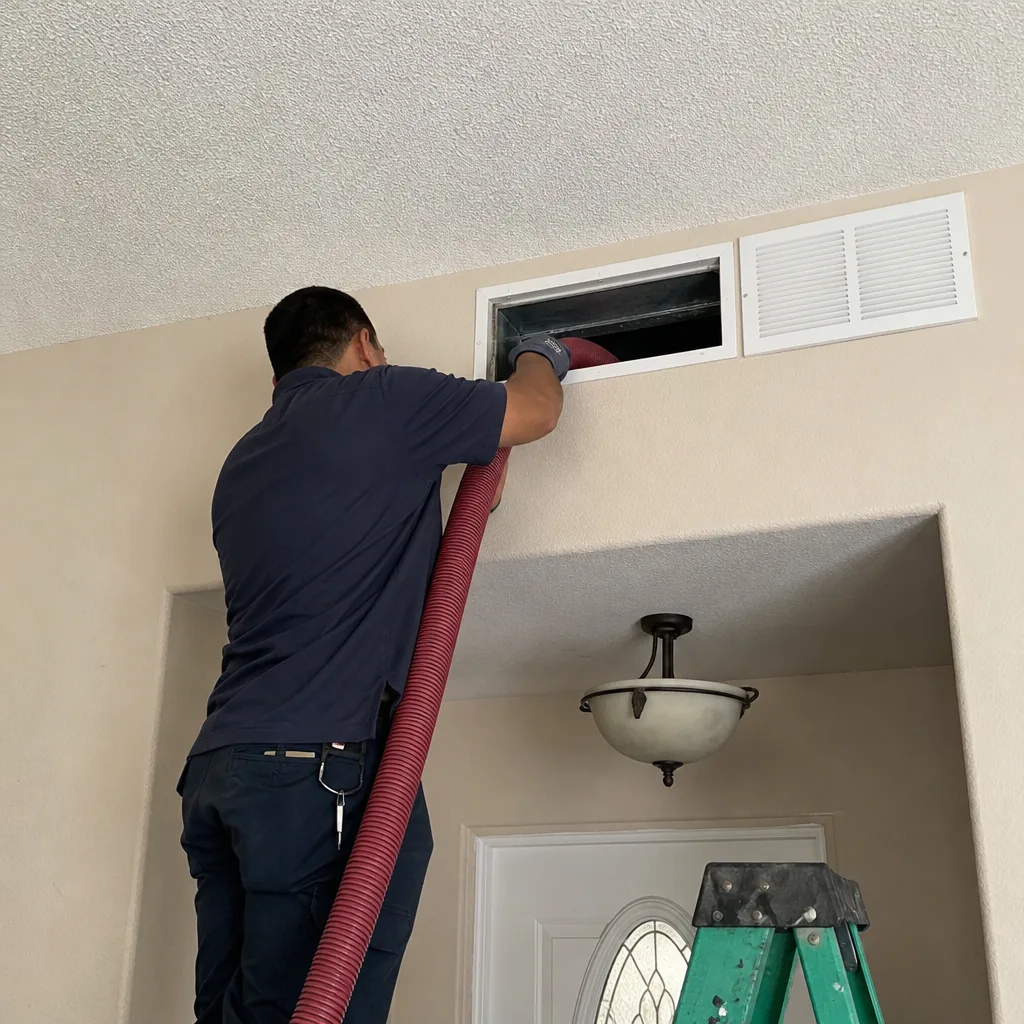
Negative-air extraction, in plain English, means a machine creates a powerful vacuum inside the duct system while a rotary brush agitates the walls. The brush dislodges the compacted crust, and the vacuum immediately pulls it out through a collection system before it can re-settle or enter your living space. The physics only work with equipment designed for exactly this job. No amount of patience or elbow grease changes the CFM a shop vacuum produces.
Las Vegas-Specific Factors That Push a Job Into Professional Territory
Every climate creates its own duct problems. Las Vegas creates four specific conditions that determine whether DIY is even worth attempting.
Homes Over 2,000 Square Feet
Larger Las Vegas homes have longer trunk lines. It’s simple geometry. A 1,200-square-foot ranch in Sunrise Manor might have a 15-foot trunk line. A 3,000-square-foot two-story in Summerlin or Henderson can have 60 feet of trunk plus 20 branches. The farther a duct runs from the air handler, the more compacted debris accumulates, and the harder it is to reach with any consumer method.
Systems Older Than 10 Years
A decade of Las Vegas summers means thousands of hours of runtime. The blower has cycled millions of cubic feet of desert air through the system. The evaporator coil has condensed gallons of water. The combination creates a hardened layer of debris that professional equipment struggles with, let alone a brush from a home improvement store. If your system is older than 10 years and has never been professionally cleaned, DIY maintenance is genuinely not worth the effort. The material you need to remove is chemically bonded to the duct walls.
Sagged or Crimped Flex Duct
Flex duct is the flexible, insulated tubing that runs from the trunk line to individual registers in many Las Vegas homes built after 1990. Over time, the insulation sags between supports, creating low spots where debris pools and collects. Crimped sections, often from attic work or careless installation, create bottlenecks where material builds up behind the restriction. A homeowner with a shop vacuum cannot fix a sag or a crimp. A professional can identify these failure points, and in many cases, reposition or repair the duct so the system flows properly again.
Prior Rodent Activity
Las Vegas attics see roof rats, mice, and the occasional pack rat. These animals nest in insulation and frequently enter duct systems through gaps at joints or around registers. Rodent droppings and nesting material in ducts are a health concern, not a housekeeping concern. This material can carry hantavirus and other pathogens, and removing it requires HEPA filtration and proper containment. If you have seen rodent droppings near your registers or heard activity in your attic, do not attempt DIY cleaning. This is a professional-only job, no exceptions.
The Real Cost Comparison: DIY Supplies vs Professional Cleaning
Here’s what each path actually costs, and more importantly, what each path actually achieves. In the Las Vegas market, air duct cleaning in Las Vegas typically runs between $250 and $450 for a full system, depending on home size, number of registers, and accessibility.
DIY Supply Costs
- Shop vacuum rental or purchase: $30 to $60 per day for a rental, $80 to $150 to buy a basic unit.
- Dryer vent brush kit: $15 to $25.
- Flexible duct brush: $20 to $40.
- Screwdrivers, flashlight, drop cloths: $15 to $30 if you don’t already own them.
- Total: $40 to $80 for a rental approach, $130 to $245 if buying everything.
What DIY Actually Achieves
- Clean register covers and return grilles.
- Removal of loose dust from the first 12 to 18 inches of each duct run.
- Zero removal of compacted debris from the trunk line.
- No improvement in system airflow in most cases.
- Time investment: 2 to 4 hours.
Professional Cleaning ($250 – $450)
- Full trunk-line debris removal using negative-air extraction.
- Brush agitation of every branch duct.
- HEPA filtration to keep loosened particles out of your living space.
- Identification of leaks, sags, and restrictions.
- Written documentation of what was done.
- Time investment from you: 30 to 60 minutes while a technician works.
The honest math is this: DIY is not a cheaper version of professional cleaning. It’s a different activity entirely. It maintains the visible parts of your system. It does not address the part of the system that determines whether your air is actually clean.
How to Do a DIY Duct Inspection Before You Decide
Before you spend money on either path, spend 15 minutes looking at your system. Here’s a straightforward method that works for any Las Vegas homeowner, or explore more guides & resources for additional help:
- Remove the return grille. It’s the largest grille in your home, usually in a hallway or central wall. Two screws, and it’s off.
- Take a photo with your phone. Most return plenums are large enough to insert your phone a few inches. Use your camera’s flash and take photos in every direction you can reach.
- Use a selfie stick for reach. A $10 selfie stick lets you insert your phone 2 to 3 feet into the return. Point it toward the air handler and take more photos.
- Look at the photos honestly. What you’re looking for: dust that is flat and gray, meaning it’s settled, versus dust that is crusted and rough, meaning it’s compacted. Crusted material is the problem. On flex duct, look for visible sagging between supports. On metal ducts, look for rust or water stains.
- Check the supply registers with the same method. Remove a register in a bedroom far from the air handler, the farthest point in the system, and photograph inside the branch duct.
If what you see is loose, fluffy dust, you can genuinely manage it with DIY maintenance. If you see crusted material, dark staining, or anything that looks like it’s been there since the house was built, your system needs professional equipment. In our experience with Las Vegas homes, most systems over 10 years old fall into the second category.
How Professional Air Duct Cleaning Actually Works
Understanding the actual mechanics of professional cleaning helps you evaluate any company you’re considering. Here’s how a proper job is done, using the equipment we run every day.
Step 1: System Inspection and Protection
The technician shuts down the HVAC system and inspects the air handler, evaporator coil, trunk line, and registers. Floor coverings go down beneath each register. The technician should explain what they found and confirm the written price before any cleaning begins.
Step 2: Negative-Air Setup
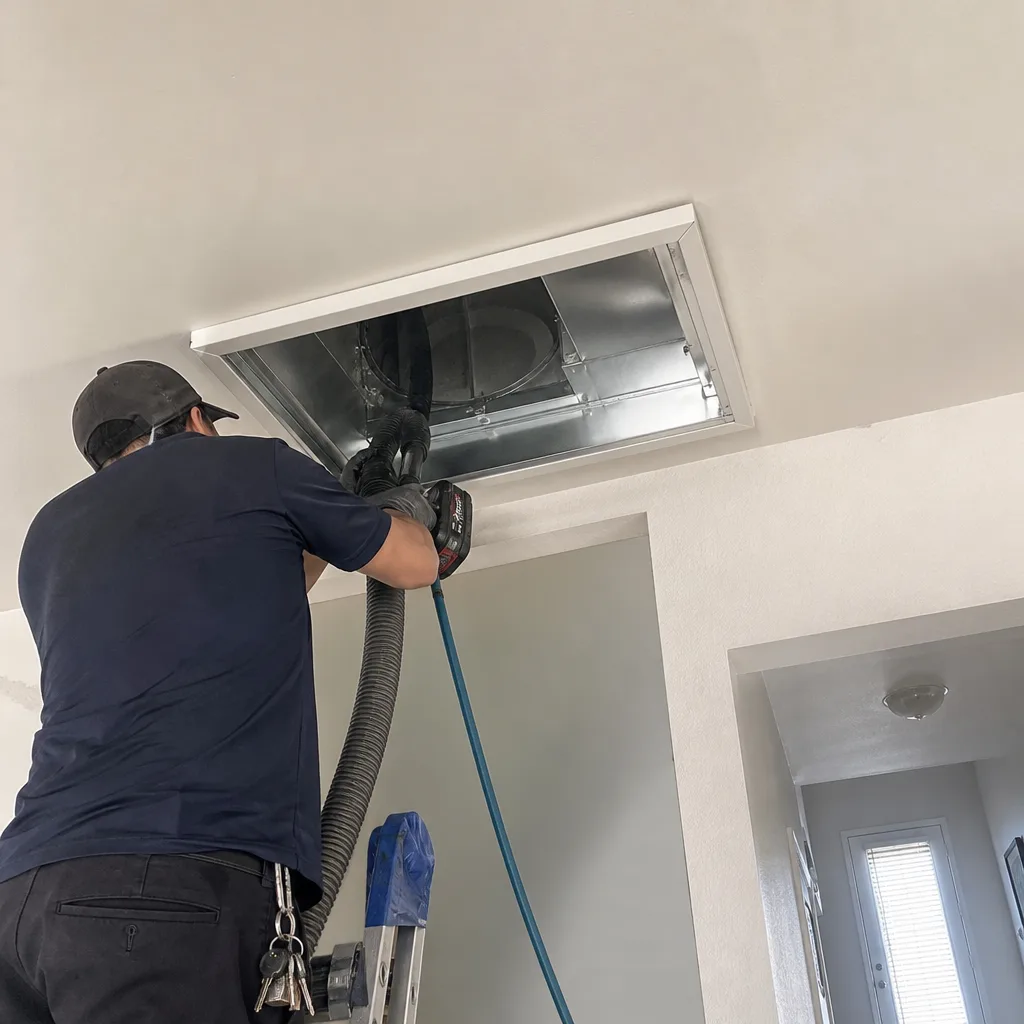
A negative-air unit, in our case a Nikro unit, connects to the trunk line. This machine creates the 1,500 to 4,000 CFM suction that professional cleaning requires. It pulls air through the entire duct system toward a single collection point, which means debris is pulled out of the ducts, not pushed around inside them.
Step 3: Brush Agitation
A rotary brush system, in our case a Rotobrush, runs through each branch duct from the register end. The spinning brush dislodges compacted material from the duct walls, and the negative-air unit immediately carries it out of the system. The brush does the dislodging, the vacuum does the removing, and the two work together. Neither works properly alone.
Step 4: HEPA Filtration
Abatement Technologies HEPA filtration runs during the entire process. This captures particles as small as 0.3 microns and keeps loosened material from entering your living space during the cleaning. In a Las Vegas home, this matters because the dust being removed from your ducts contains all the material that’s been circulating through your air for years.
Step 5: Final Verification
A proper professional clean ends with before-and-after photos of the trunk line and a written report of what was done. If a company won’t show you what they did, that’s a sign the work wasn’t done properly. The Kestrel Air Duct Las Vegas home team documents every job with photos, because we believe you should see exactly what your money paid for.
Maintenance Between Professional Cleanings
Professional cleaning is not a forever fix. Your system pulls Las Vegas air through it every time the blower runs, and dust returns. For year-round maintenance tips, see our Seasonal Air Duct Cleaning Care for Las Vegas: Year-Round Homeowner’s Guide. Here’s what actually helps between cleanings:
- Change your filter every 30 to 60 days. In Las Vegas, with our dust load, monthly is better during summer months when the system runs nonstop. A dirty filter forces the blower to work harder and pulls more dust through the system.
- Vacuum register covers monthly. It takes 30 seconds per register and keeps visible dust from accumulating.
- Keep the return area clear. Furniture, rugs, or pet beds near the return grille restrict airflow and cause the system to pull from wherever it can, including wall cavities.
- Consider a better filter or IAQ product. Honeywell and Aprilaire both make filtration products that substantially reduce the dust load entering your ducts in the first place. If you’re interested, ask us about what fits your system.
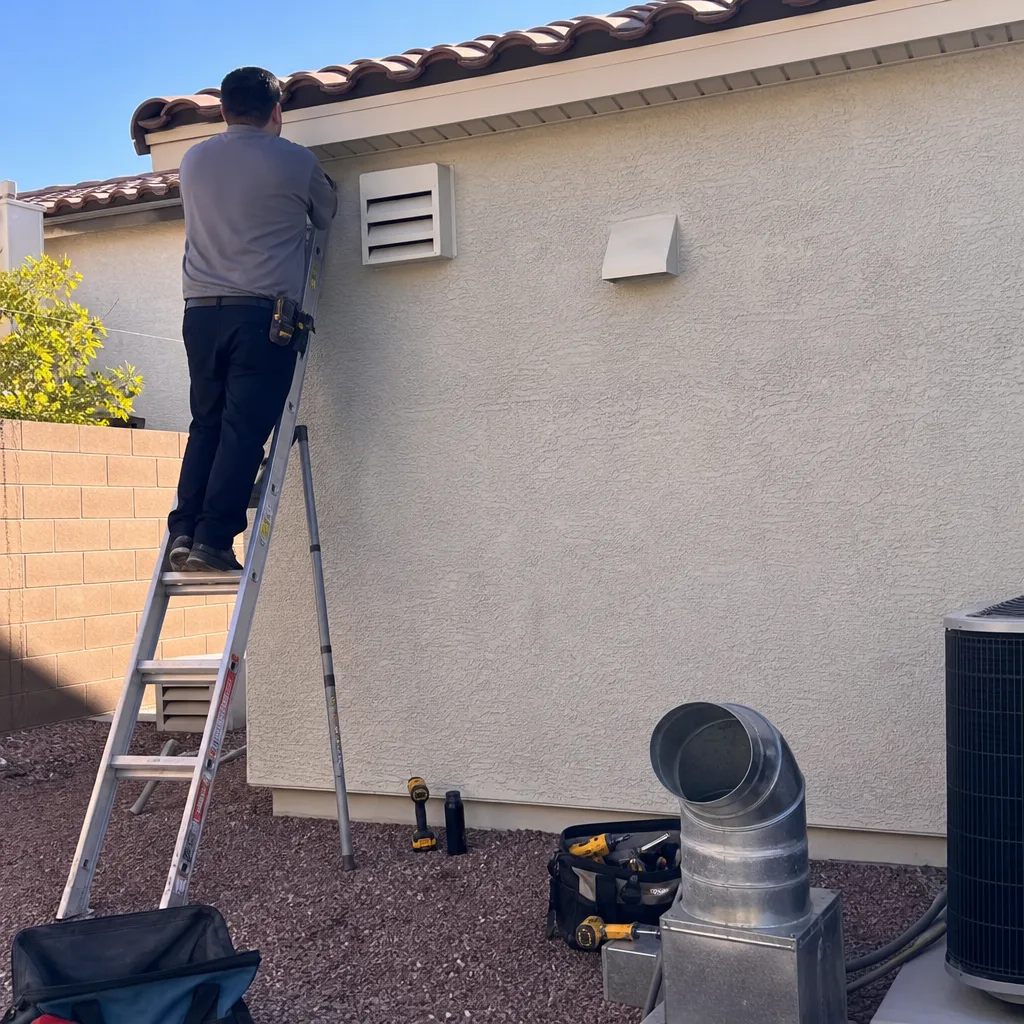
- Schedule dryer vent cleaning in Las Vegas separately. Your dryer vent is a different system from your HVAC ducts, with different debris (lint versus dust) and different risks (fire versus air quality). Don’t assume one cleaning covers both.
Common Mistakes to Avoid
- Using a leaf blower to “blow out” the ducts. We’ve seen this attempted in Las Vegas garages more than once. It doesn’t remove debris; it redistributes it. Blowing into a register sends dust backward through the system and out every other opening, including into the air handler where it coats the blower and coil.
- Pushing a brush too far into flex duct. Flex duct tears easily. A stiff brush pushed 3 feet into a flex run can puncture the inner liner, and now you have a leak somewhere you can’t see. Leaks in attics pull hot Las Vegas attic air into your conditioned space, raising your cooling bill.
- Cleaning without replacing the filter afterward. A clogged filter undoes any benefit from cleaning. The system immediately starts pulling new dust in, and a dirty filter makes it worse.
- Assuming one cheap cleaning solves years of neglect. A 20-year-old-system that has never been cleaned does not get fully restored in one visit, no matter what the price. It gets substantially improved. Honest companies tell you what’s achievable. Unrealistic promises are a red flag.
- Hiring based on the lowest phone quote. The Las Vegas air duct cleaning market includes operators who quote $69 over the phone and then “discover” problems once they arrive. Get the price in writing before work starts. If a company won’t commit to a written price, that’s not a company.
- Skipping the inspection step. Not looking at your ducts before you decide is like buying tires without looking at the old ones. The inspection takes 15 minutes and tells you everything you need to know.
When to Call a Professional
Call a professional if any of these apply to your Las Vegas home: your system is over 10 years old, your home is over 2,000 square feet, you have flex duct that has sagged or crimped, you’ve seen or heard evidence of rodents, anyone in the home has allergies or respiratory conditions, you see dust settling on surfaces within days of cleaning, or you’ve never had the ducts cleaned since you moved in. For help choosing, see our guide on How to Hire a Air Duct Cleaning Contractor in Las Vegas: A Step-by-Step Guide. These situations all require negative-air extraction and professional equipment.
Kestrel Air Duct Las Vegas offers free estimates in Las Vegas. Call (725) 210-0612 and a live person answers, any time of day. We give you a written price before any work begins, and we stand behind it.
Frequently Asked Questions
Every 3 to 5 years is the right interval for most Las Vegas homes, with the shorter end of that range for homes with pets, smokers, or occupants with allergies. The desert dust load in Las Vegas is simply higher than in most climates, and systems that run all summer accumulate debris faster. Call (725) 210-0612 for a free inspection if you’re unsure where your system stands.
DIY cleaning is worth doing as maintenance between professional cleanings, but it is not a substitute for professional cleaning. You can clean register covers, the return grille, and the first foot or so of each duct. You cannot reach the trunk line where the debris that affects air quality actually accumulates.
Most Las Vegas homes run between $250 and $450 for a complete system cleaning, depending on home size, number of registers, and duct accessibility. Be wary of quotes dramatically below this range. A $69 phone quote in the Las Vegas market is almost always a door-step upsell waiting to happen. Call (725) 210-0612 for a written quote before any work begins.
Negative-air extraction creates 1,500 to 4,000 CFM of suction at the trunk line while a rotary brush agitates the duct walls simultaneously. A shop vacuum produces roughly 100 to 150 CFM. The airflow difference is the difference between clearing loose dust and removing compacted debris. The two methods are not comparable in what they achieve.
Yes. Las Vegas air contains caliche dust, pollen from desert plants, and fine particulates that your filter doesn’t fully capture. When these accumulate in ducts, every cycle of the blower recirculates them through your living space. A professional cleaning removes the reservoir of irritants, which is why allergy sufferers often notice the difference within days.
Look for three things: a written price before work begins, before-and-after photos of the trunk line, and a written guarantee that covers the work for a meaningful period. If a company offers none of these, keep looking. Kestrel Air Duct Las Vegas provides all three, including the 365-Day Done Right Promise in writing on every job.
The Bottom Line
DIY air duct cleaning in Las Vegas is real work that produces real but limited results. You can clean the visible parts of your system, and you should. What you cannot do is reach the compacted caliche crust in the trunk line that determines whether your air is actually clean. Professional cleaning with negative-air extraction costs $250 to $450, removes what DIY cannot, and includes written documentation of the work. If your Las Vegas home is over 10 years old or over 2,000 square feet, schedule a professional cleaning and use DIY maintenance to stretch the time between visits. The decision isn’t either-or. It’s knowing which tool fits which job.
Written by Dale Whitmore, Owner at Kestrel Air Duct Las Vegas, serving Las Vegas since 2004.
See the difference
 Before
 After
After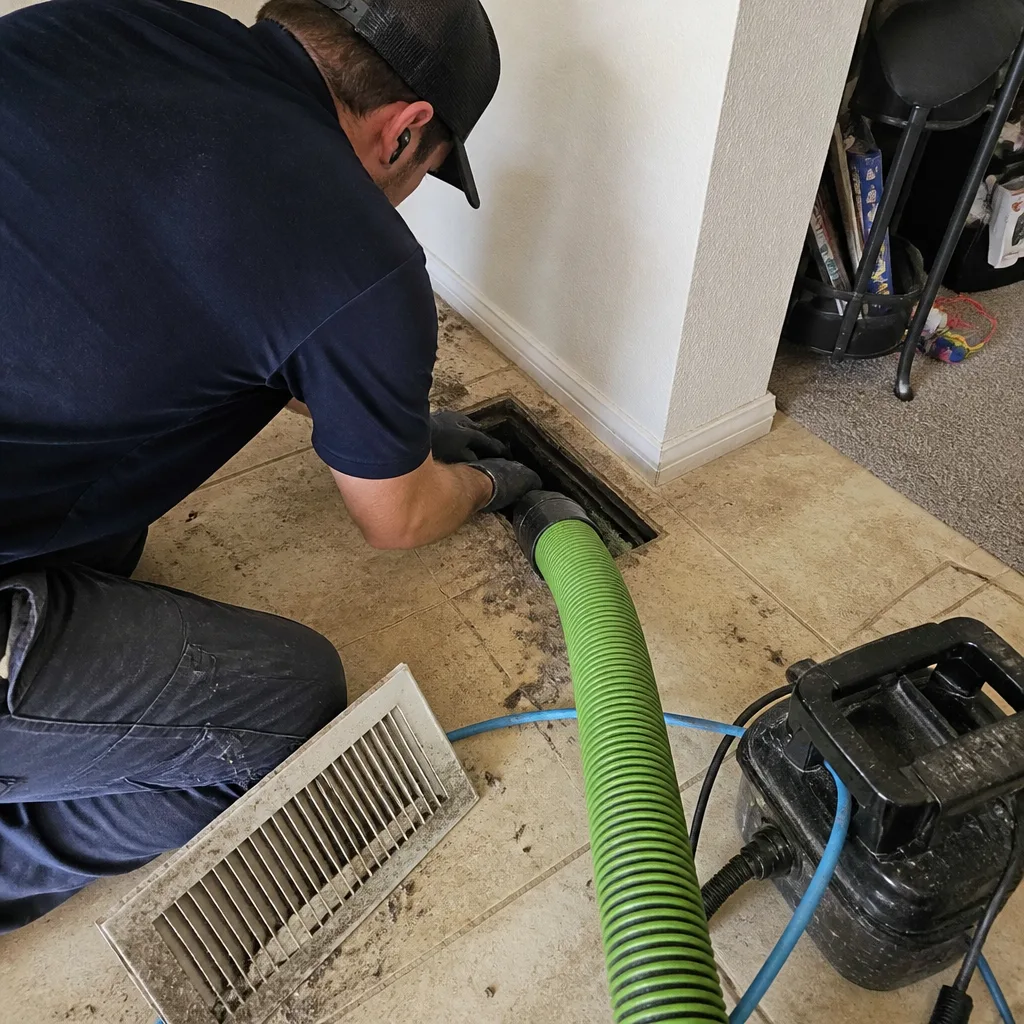 Before
 After
After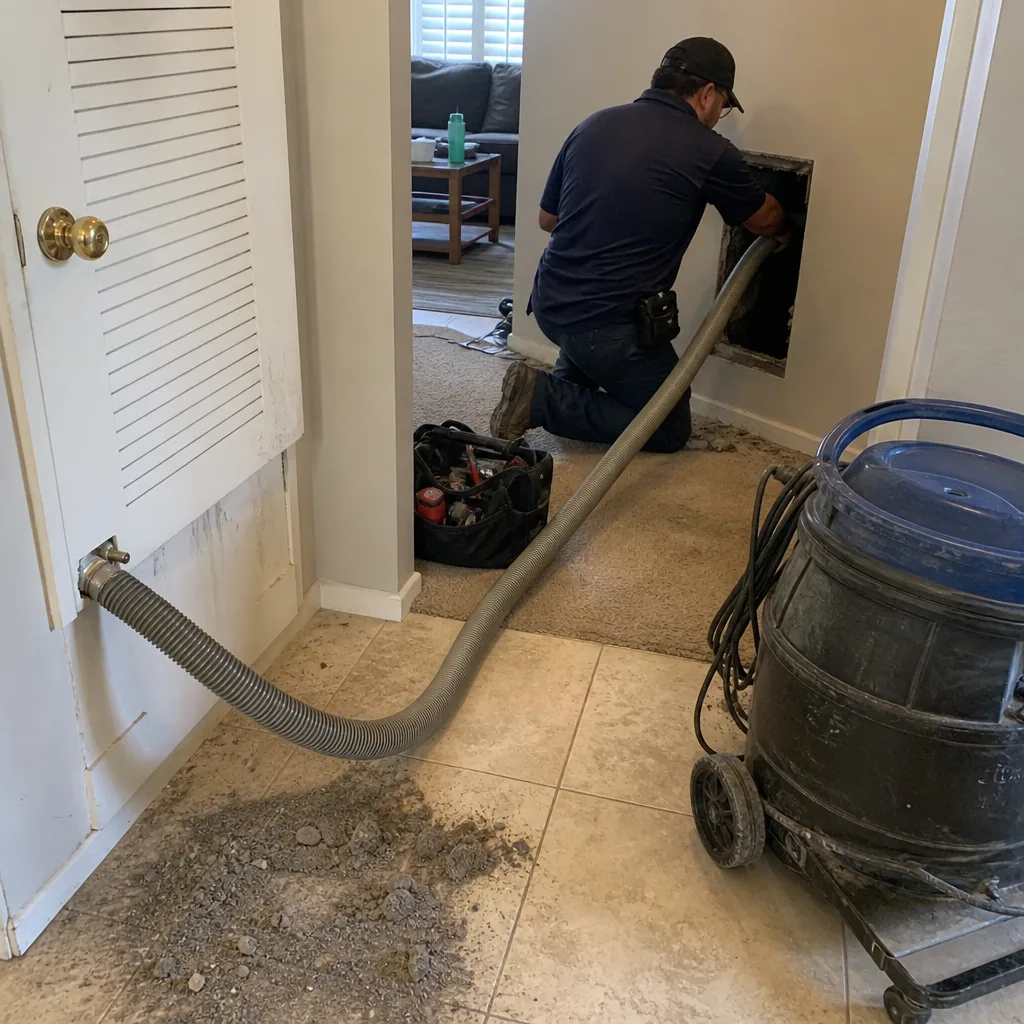 Before
 After
After