
Last updated October 15, 2026
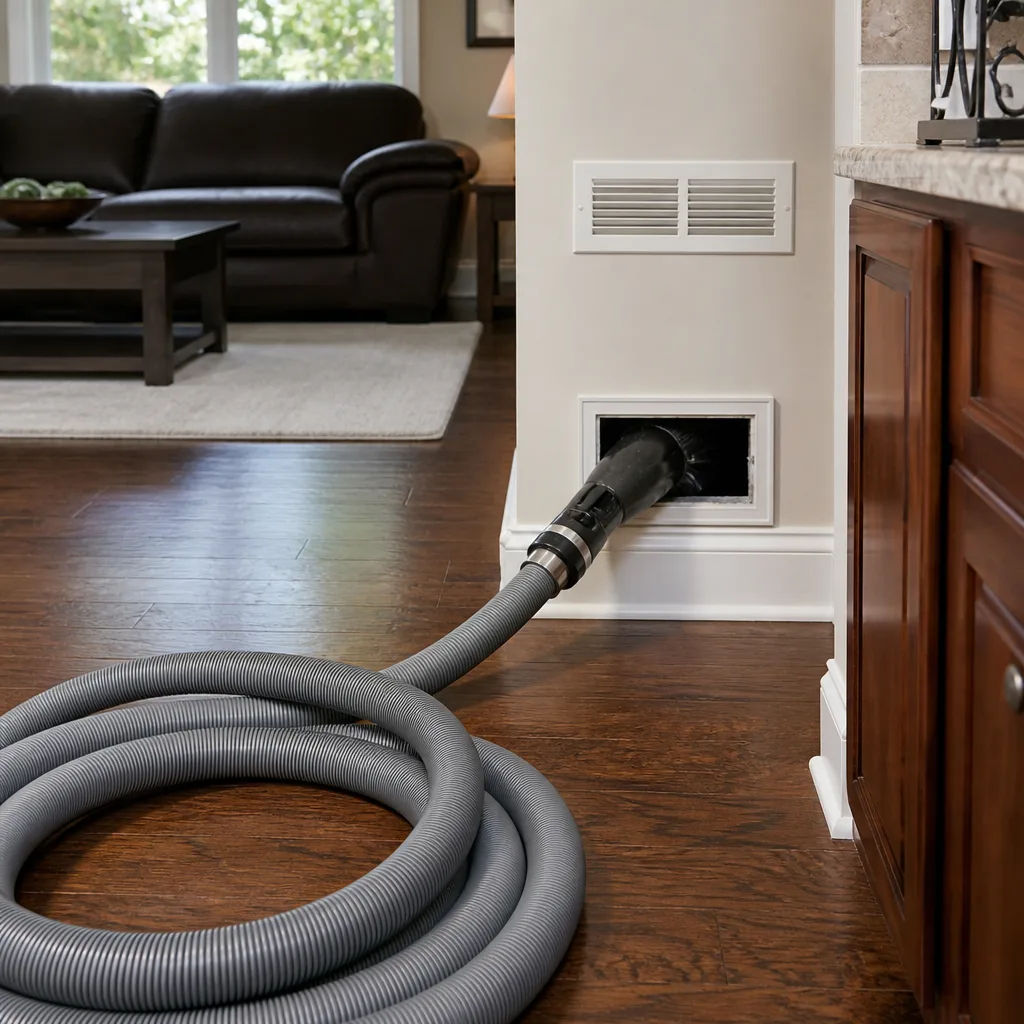 Whole-home duct cleaning
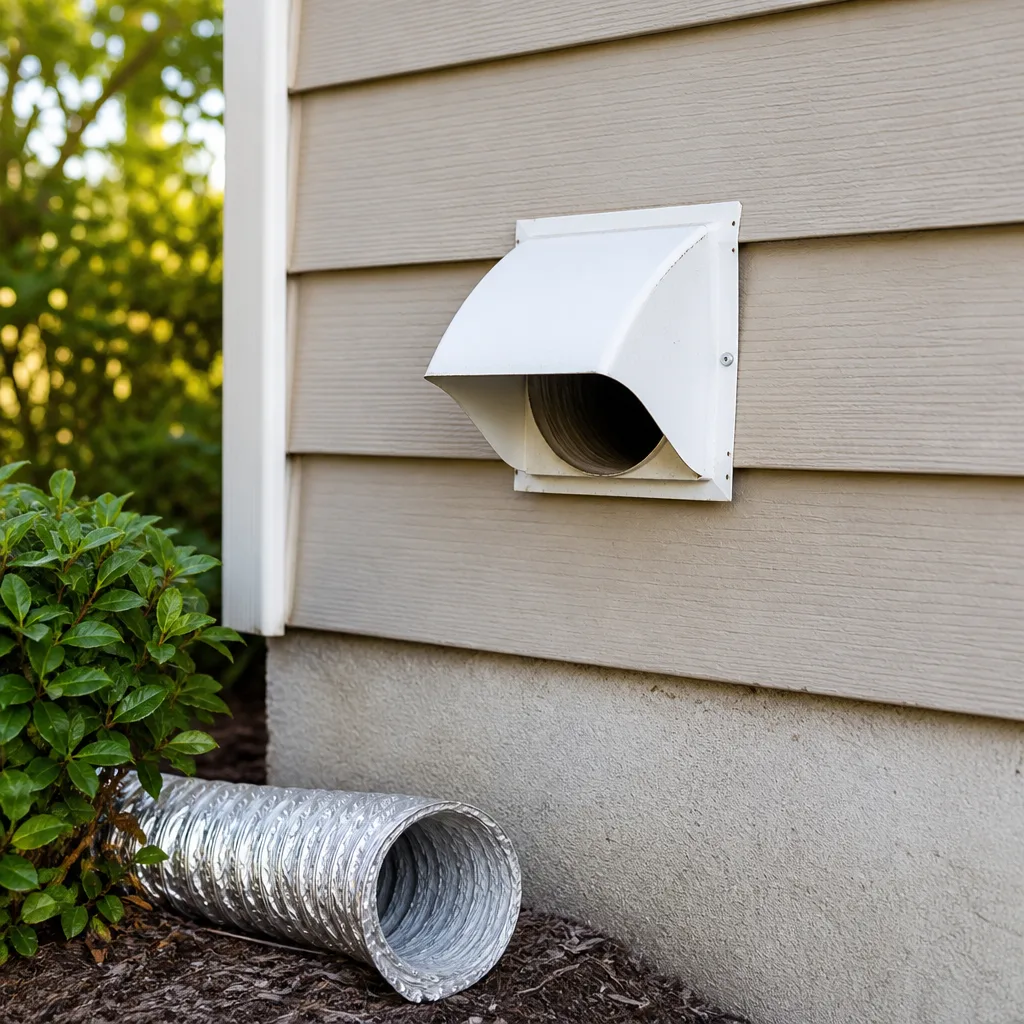 Dryer vent cleaning
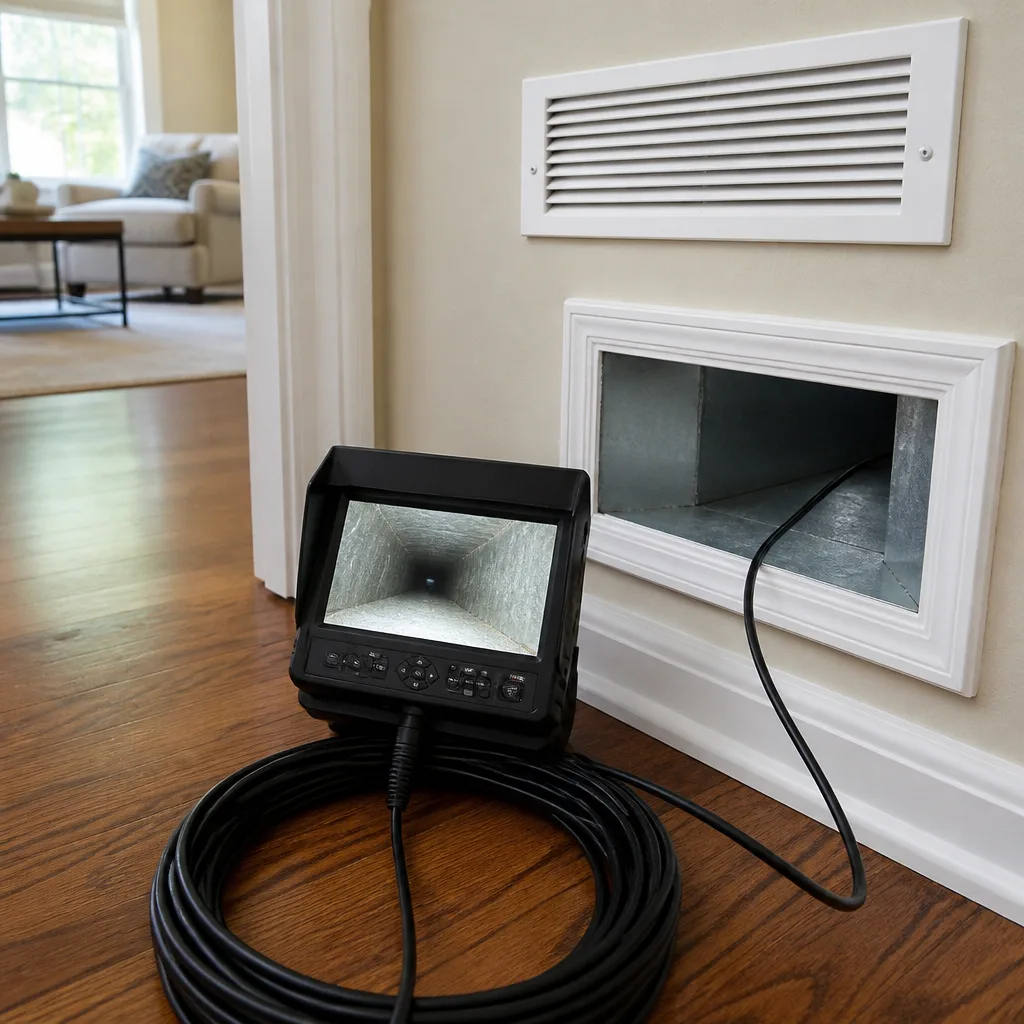 Camera inspection
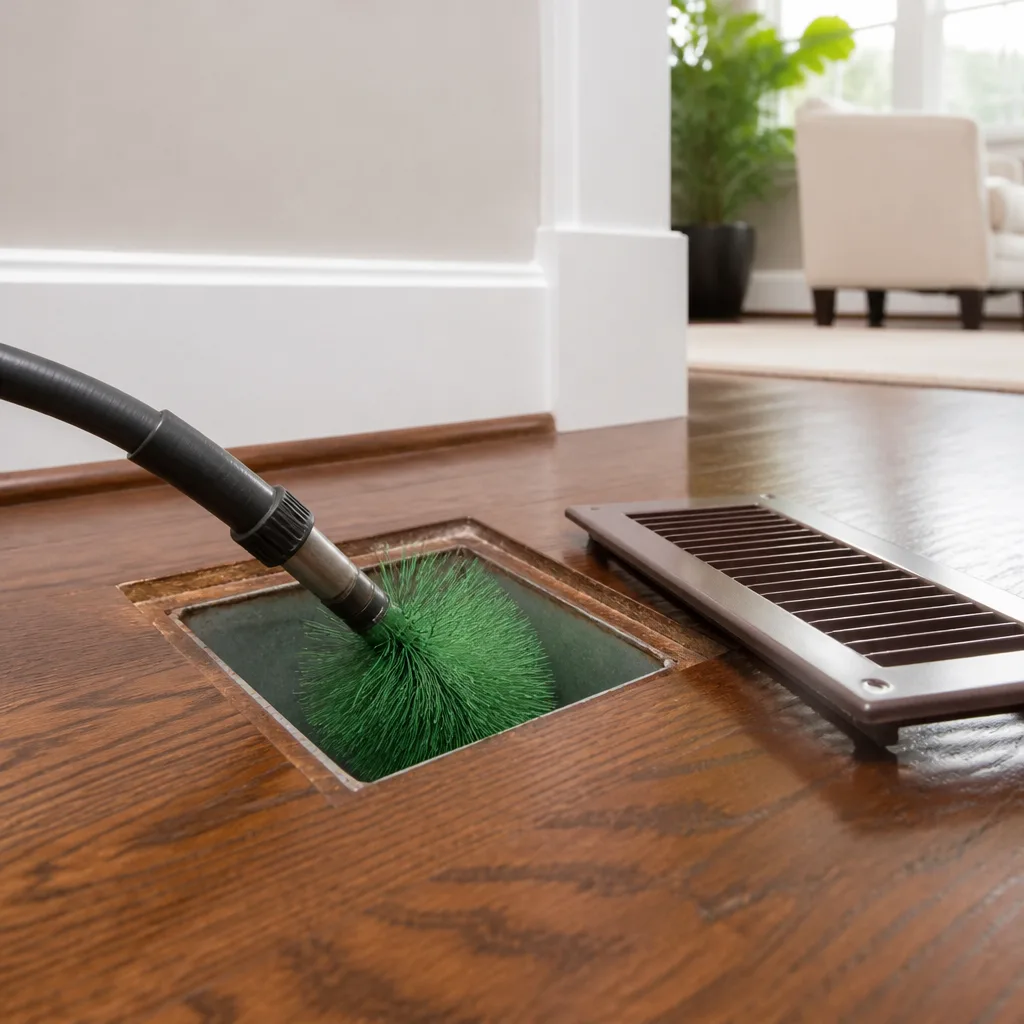 Sanitizing & deodorizing
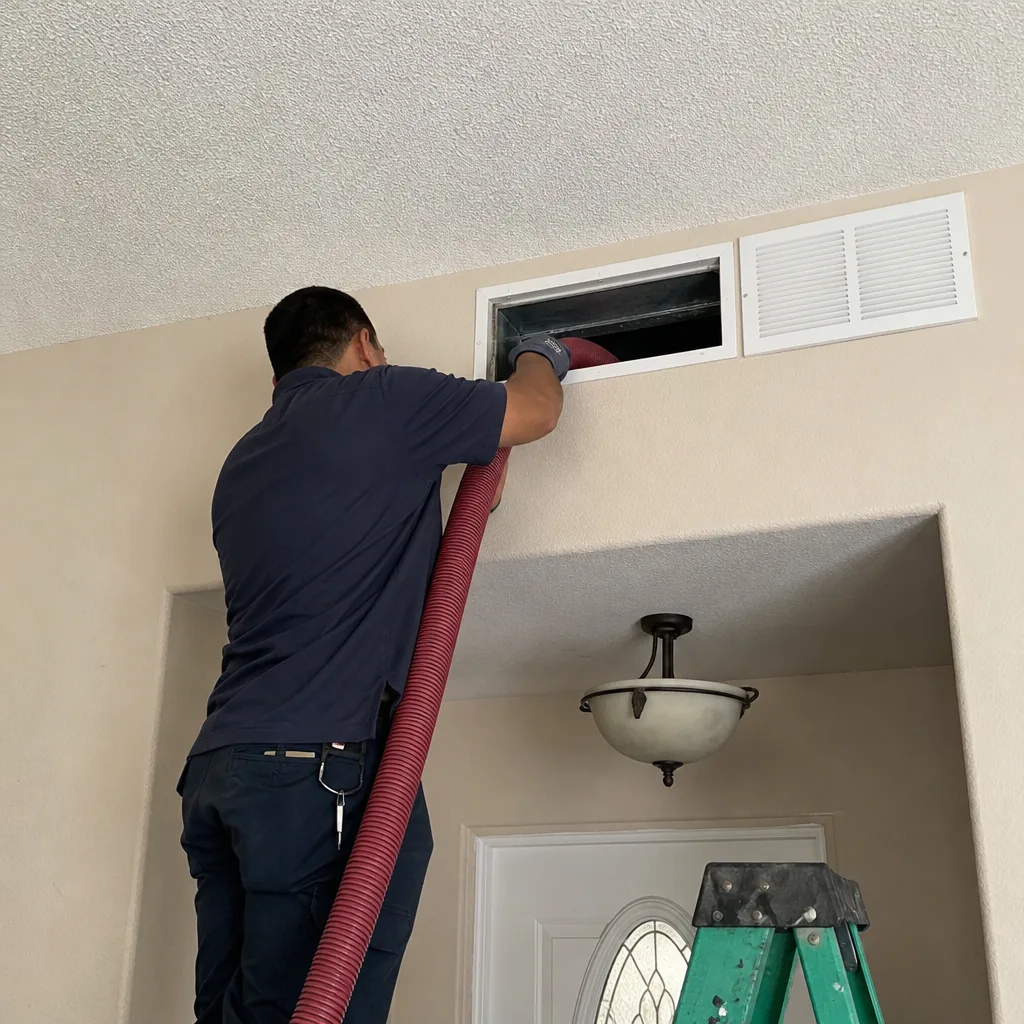
Whole-system duct and dryer vent check with before-and-after photos - you see exactly what came out of your vents
That "$99 whole-house special" is a bait ad - the real number appears once they are in your hallway, or the "clean" is a shop-vac at the register. We photograph the inside of your ducts before and after instead.
Air Duct Cleaning Warning Signs: A Las Vegas Homeowner’s Reference Guide
In a humid city, mold in ductwork announces itself with a smell. In Las Vegas, where relative humidity rarely climbs above 10%, biological growth inside ducts can reach advanced stages with no odor at all. The first symptom many homeowners notice is an unexplained spike in their electric bill as airflow restriction forces the blower to work harder. This guide covers the early, Vegas-specific warning signs that most checklists miss entirely, and for more guides & resources on keeping your home healthy, explore our blog.
Quick Answer
The earliest warning signs of dirty air ducts in Las Vegas are rising NV Energy bills without a matching increase in usage, uneven room temperatures in a single-story home, and a fine white or tan dust that returns within days of wiping surfaces-details we cover more fully in The Complete Guide to Air Duct Cleaning in Las Vegas. Visible dust at vents and musty odors appear late, if at all, in a desert climate where dry air suppresses the cues homeowners in other regions rely on.
Styles & brands we work with
Table of Contents
- Rising Utility Bills: The Silent Early Warning
- Uneven Room Temperatures in a Single-Story Las Vegas Home
- Caliche-Packed Return Grilles vs. Normal Dust
- The 2010 – 2018 Spray-Foam Attic Problem
- Duct Problem or Dirty Evaporator Coil?
- The Las Vegas Dust Signature: What to Look For
- Common Mistakes to Avoid
- When to Call a Professional
- Frequently Asked Questions
- The Bottom Line
Rising Utility Bills: The Silent Early Warning
In Las Vegas, your HVAC system runs harder than almost anywhere else in the country. Summer temperatures above 110°F mean the blower motor cycles constantly. When ducts accumulate a layer of fine desert dust and construction debris, that material creates resistance. The blower has to work against it, and that work shows up on your bill.
Here is the specific early-warning signal most guides miss: a rising kilowatt-hour usage pattern that does not match the outside temperature pattern. You are looking for months where the average outdoor temperature was the same as last year, but your usage climbed. NV Energy provides historical usage data in your online account, and the comparison is straightforward.
How to cross-reference your bill against HVAC runtime
- Log into your NV Energy account and pull the last 24 months of usage data.
- Compare each month against the same month one year prior. Flag any month where usage increased by 10% or more without a matching jump in average temperature.
- For each flagged month, estimate how many hours per day your HVAC ran. A digital thermostat records runtime; if yours does, pull that data.
- Divide the monthly kilowatt-hours by estimated runtime hours. If that number is trending upward across seasons, the blower is drawing more current to push against increasing duct restriction.
- Rule out a dirty air filter first. Replace it, run the system for two weeks, and recheck usage. If the pattern persists, the restriction is likely inside the ducts themselves.
We have inspected homes in Summerlin and Henderson where a 15% usage increase was entirely explained by a return duct packed with construction debris left from a renovation. The HVAC system itself was fine. The ducts were strangling it.
Our Air Duct Cleaning services in Las Vegas address this directly. A professional cleaning with negative-air extraction removes the restriction at its source rather than treating the symptom with a higher thermostat setting.
Uneven Room Temperatures in a Single-Story Las Vegas Home
A two-story Las Vegas home runs warm upstairs in July. That is physics, not a defect. But a single-story home should hold temperature within two to three degrees from room to room. When one bedroom sits five degrees warmer than the living room in the same house, the cause is usually airflow, and in Las Vegas the prime suspect is duct condition.
What most homeowners assume is a thermostat problem, a bad damper, or an undersized unit is often something simpler: a duct run that has collapsed, disconnected at a joint, or filled with enough debris that the room at the end of the run is starved for air. In slab-on-grade construction, which covers most of the Las Vegas Valley, ducts run through the attic. Desert heat bakes that attic to 140°F or more in summer. Flexible ductwork ages faster in that environment than anywhere else in the country.
Three signs the temperature imbalance is a duct problem, not a thermostat problem
- One specific room, always the same room. A thermostat issue affects the whole house. A duct issue isolates. If the same bedroom is warm every afternoon while the adjacent hallway is comfortable, follow the duct.
- Weak airflow at the register. Hold a tissue near the vent in the warm room and then near a vent in a comfortable room. The difference in airflow force is usually obvious. A dirty or collapsed duct reduces volume, not just temperature.
- The system runs longer than it should. When one room cannot satisfy, homeowners lower the thermostat to compensate. The system overcools the rest of the house and still never fixes the problem room.
In our experience, when we open a warm-room duct in a Las Vegas single-story home, we find one of three things: a disconnected joint where the flex duct separated from the boot, a section of flex duct crushed by a box stored in the attic, or a duct interior lined with years of fine dust. The first two require repair, but the third is a professional air duct cleaning situation. We use Rotobrush rotary brush systems to dislodge debris at the duct wall, then Nikro negative-pressure units to pull that loosened material out of the home.
Caliche-Packed Return Grilles vs. Normal Dust
Las Vegas sits on caliche, a hardpan of calcium carbonate that runs under much of the valley. Construction from the 1990s through the 2000s kicked up enormous amounts of caliche dust, and some of it settled permanently inside duct systems. The visual signature is distinct, and learning to read it will save you from overpaying for service you may not need.
Normal household dust is gray-brown, soft, and fluffy. It wipes away easily. Caliche dust is different. It is white-to-tan, fine as flour, and slightly gritty to the touch. When it packs into a return grille, it forms a crust that does not vacuum off. You can scrape it with a fingernail, and it comes away as a hard scale. That is the signature of caliche.
Here is why the distinction matters: a return grille with normal dust accumulation can be removed, washed in the sink, and reinstalled in fifteen minutes. That is homeowner maintenance, not a service call. A grille packed with caliche indicates the same crust has formed inside the duct system. The restriction is not at the grille face; it is on the duct walls. Removing the grille and wiping its surface solves nothing because the problem continues upstream. That situation requires professional extraction.
Do not attempt to scrape caliche from inside a duct yourself. The material is abrasive and easily airborne. A professional cleaning with Abatement Technologies HEPA filtration captures the loosened particles inside the equipment, keeping them out of your living space. Our technicians run background checks, arrive in uniform, and follow the Kingswell Way on every visit: say the price, show up in the window we gave, leave the place cleaner, and put the guarantee in writing.
The 2010 – 2018 Spray-Foam Attic Problem
Between roughly 2010 and 2018, thousands of Las Vegas homes were built or retrofitted with spray-foam attic insulation. Spray foam is an excellent insulator. It also introduced a duct contamination vector that few homeowners know about.
When spray foam is improperly mixed or applied in a confined attic with limited ventilation during the curing period, it off-gasses volatile compounds. In a humid climate, those compounds ventilate and dissipate. In a Las Vegas attic, where temperatures routinely exceed 130°F and air movement is minimal, the off-gassing process behaves differently. The compounds condense as a sticky film on the coolest available surfaces, including the exterior of flex duct runs and, over time, the interior duct liner.
That film traps dust. Once the film is present, ordinary airborne particles stick to the liner and build up far faster than normal. The duct becomes self-contaminating. Homeowners in these houses often report that their filters clog twice as fast as expected, and that a fine dust reappears on surfaces within days of cleaning.
If your home was built or re-insulated between 2010 and 2018 and your attic is sealed with spray foam, pay attention to these signals. Check the date on your water heater or the original building permit if you are unsure when the insulation was installed. The presence of the foam is not automatically a problem, but it raises the baseline risk, and it changes the recommendation on cleaning frequency. For these homes, an inspection by Kestrel Air Duct Las Vegas can determine whether the liner condition warrants more frequent service. We give a written price before any work begins, so an inspection never turns into a surprise invoice.
The Las Vegas Dust Signature: What to Look For
Dust in Las Vegas is not the same as dust in other parts of the country. It is finer, lighter in color, and more alkaline. It is also relentless. Homes here accumulate dust faster than almost anywhere else in the United States because the surrounding desert produces a constant supply and the air is dry enough to keep it suspended longer.
A certain amount of household dust is normal and unavoidable. What separates normal from a duct problem is a specific pattern: dust that returns to surfaces within three to four days of wiping, concentrated near supply registers, with a fine, powdery texture rather than a soft, fibrous one. If you wipe a black TV stand on Monday and the same fine film is visible on Wednesday, the ducts are feeding the problem rather than containing it.
Another signature worth noticing: dust that accumulates on the back side of ceiling fan blades and the tops of door frames. These surfaces catch airborne particles that have circulated through the living space. When the supply registers are the primary source, the pattern near the vents will be noticeably heavier than elsewhere in the room.
What to watch for
- Fine white or tan dust at register faces, reappearing days after cleaning
- Dust streaks on walls near ceiling vents, following the airflow path
- Filter media that appears coated with a dense, clay-like layer rather than a loose gray fuzz
- Dust buildup inside the return grille that feels gritty, not soft
None of these signs alone proves a duct problem. Together, or in combination with the utility bill pattern described above, they point in one direction. The air duct cleaning service in Las Vegas that addresses this properly will use negative-air extraction to pull contamination out rather than pushing it through the system. We run Nikro negative-pressure units that create continuous suction at the duct opening while Rotobrush agitation loosens material from the walls. Honeywell filtration products are available for homeowners who want to hold the line between professional cleanings.
Duct Problem or Dirty Evaporator Coil?
Two separate issues share almost identical symptoms: a dirty evaporator coil and contaminated ducts. Both restrict airflow, raise utility bills, cause uneven temperatures, and reduce system efficiency. The service response, however, is completely different, and paying for the wrong one wastes money.
Here is how to tell them apart without opening the unit:
- Check the temperature drop across the system. With the system running, measure the air temperature at the return grille and again at the supply register closest to the air handler. A healthy temperature drop is 15 to 20°F. A dirty coil typically reduces the drop below 12°F because the coil cannot cool the air passing over it. A duct restriction typically keeps the drop in normal range while reducing overall airflow volume. Buy a cheap probe thermometer and this simple measurement tells you a lot.
- Look at the condensate line. A dirty evaporator coil causes ice to form and the condensate line to run heavily or flood. Duct contamination does not change the coil’s condensation pattern. If you see water around the air handler or an overflow alarm tripping, the coil is the prime suspect.
- Inspect the register closest to the air handler versus the farthest. Duct contamination creates a graduated pressure loss along the run. The register nearest the air handler blows strong; the one at the far end of the house blows weak. A dirty coil restricts airflow evenly throughout the house because it sits upstream of the entire duct network.
- Check your filter’s replacement history. If filters load up with fine white dust far faster than the 90-day replacement window, the duct system is the source feeding that contamination. The coil is downstream and would never contribute upstream debris.
If the signs point to the coil, that is a separate service call. Kestrel Air Duct Las Vegas cleans ducts and dryer vents, and we will tell you plainly when the problem belongs to your HVAC contractor instead. The Kingswell Way means saying the price and being honest about scope. We would rather earn your trust than sell a service that does not address the problem.
Common Mistakes to Avoid
- Waiting for a smell before investigating. In Las Vegas humidity, biological growth inside ducts rarely produces the musty odor that triggers alarm in wetter climates. By the time you smell something, the contamination is advanced. Watch the earlier signals: utility usage, dust patterns, and temperature imbalance.
- Assuming the filter is doing the whole job. A filter protects the equipment, not your lungs. Whatever passes through the filter still travels through the ducts and into the living space. A good filter slows contamination, but it cannot clean ducts that are already loaded.
- Replacing the thermostat when one room runs warm. A thermostat replacement costs $200 to $500 and does nothing for a collapsed or clogged duct run. Measure the airflow first. You will likely find the problem is not electronic at all.
- Scraping caliche off a return grille without addressing the ducts behind it. The grille face is the visible portion of a larger surface. Scraping it clean restores appearance but leaves the wall deposits inside the ducts untouched.
- Hiring based on a low per-vent price. In this industry, low advertised prices are often a way to get a technician to your door, at which point the real price emerges. The Kestrel approach is the same on every job: a written price before work starts, covering the whole system, with no per-vent math games.
- Ignoring the attic after a renovation. Any work in the attic, from insulation to recessed lighting to a bathroom fan replacement, releases particles into the duct system. If you have had attic work done recently and symptoms appeared shortly after, that timeline is not a coincidence.
- Assuming a newer home has clean ducts. Construction dust does not respect a build year. New neighborhoods across the Las Vegas Valley have duct systems filled with drywall dust, paint overspray, and insulation fibers from the day the certificate of occupancy was signed.
See the difference
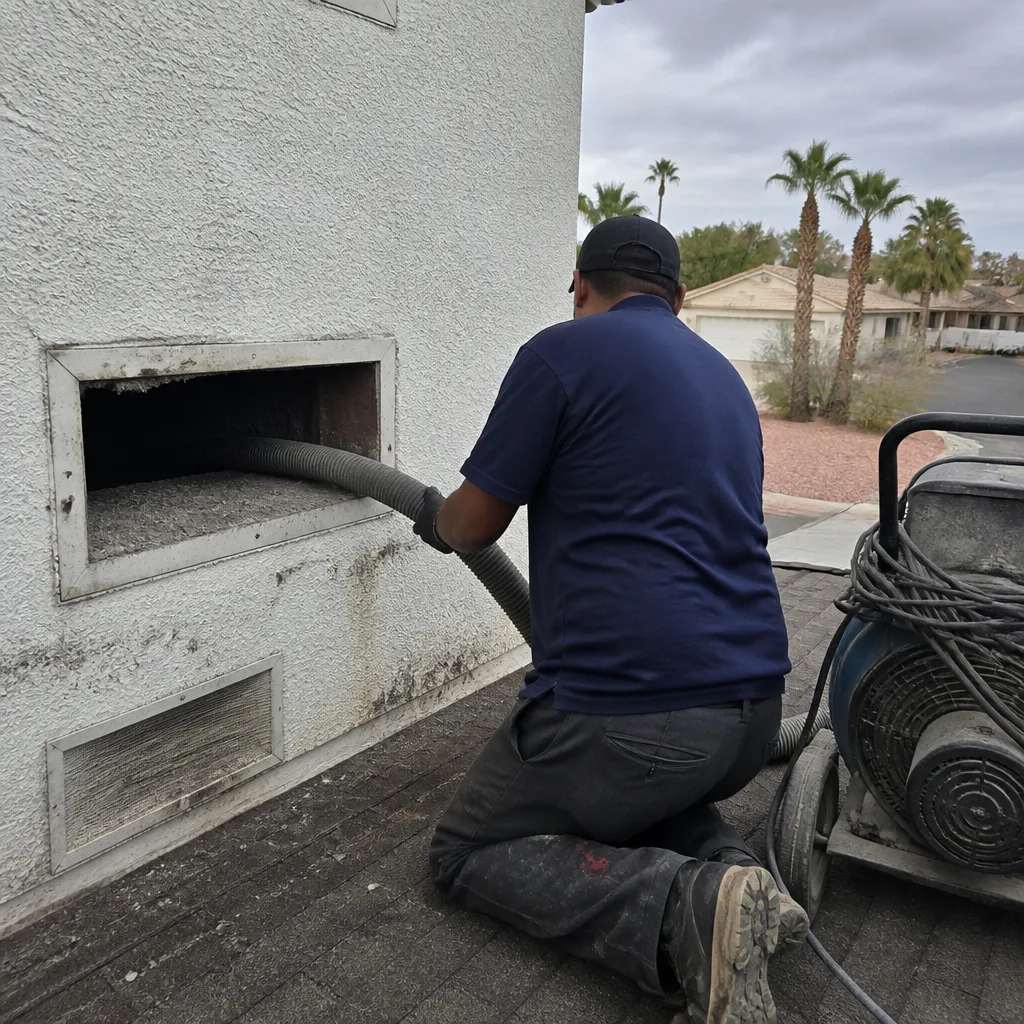 Before
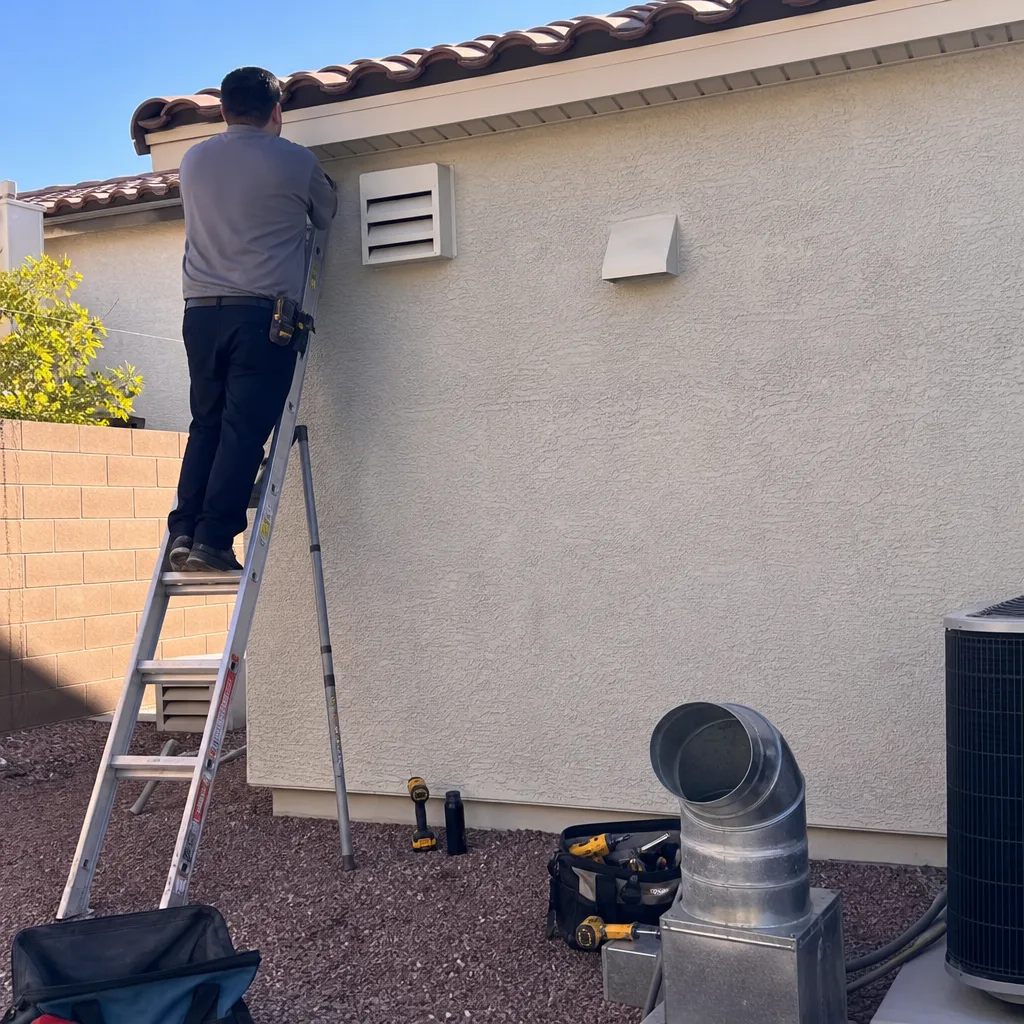 After
After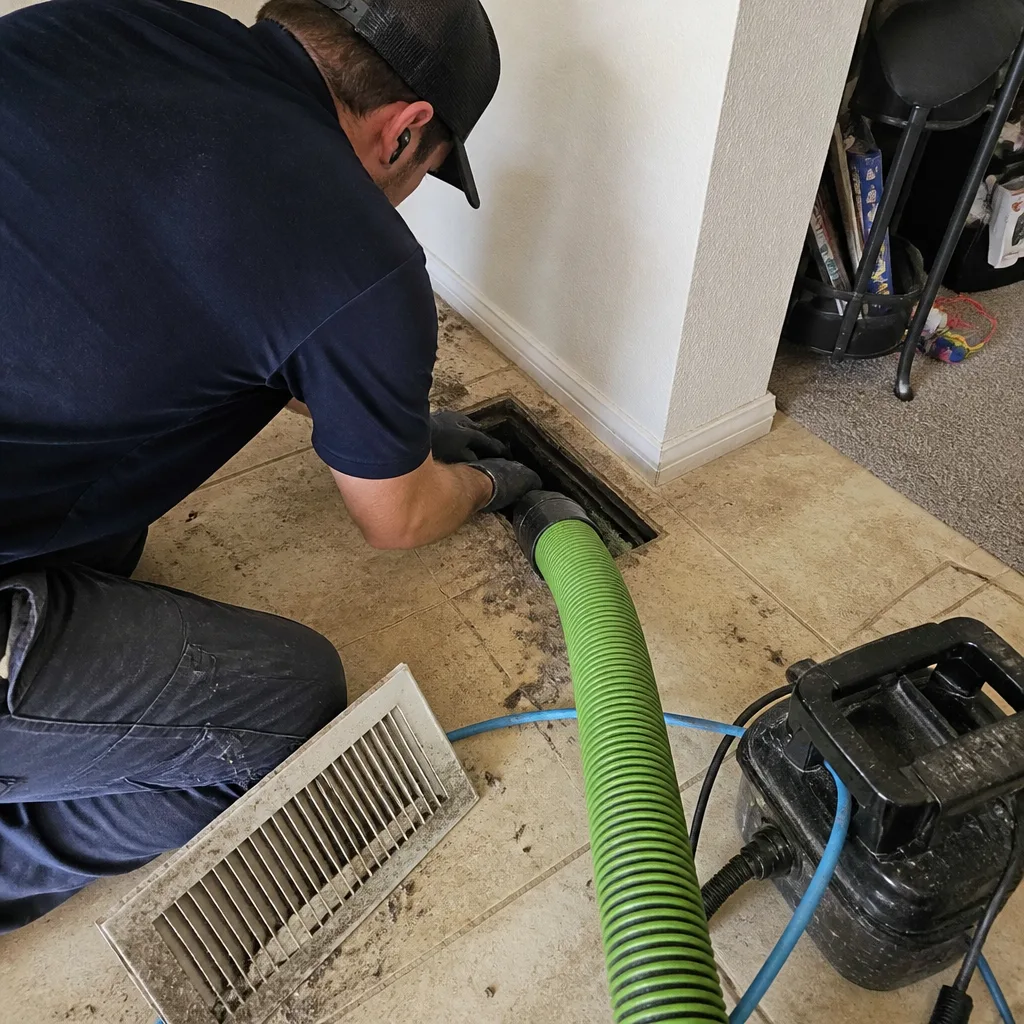 Before
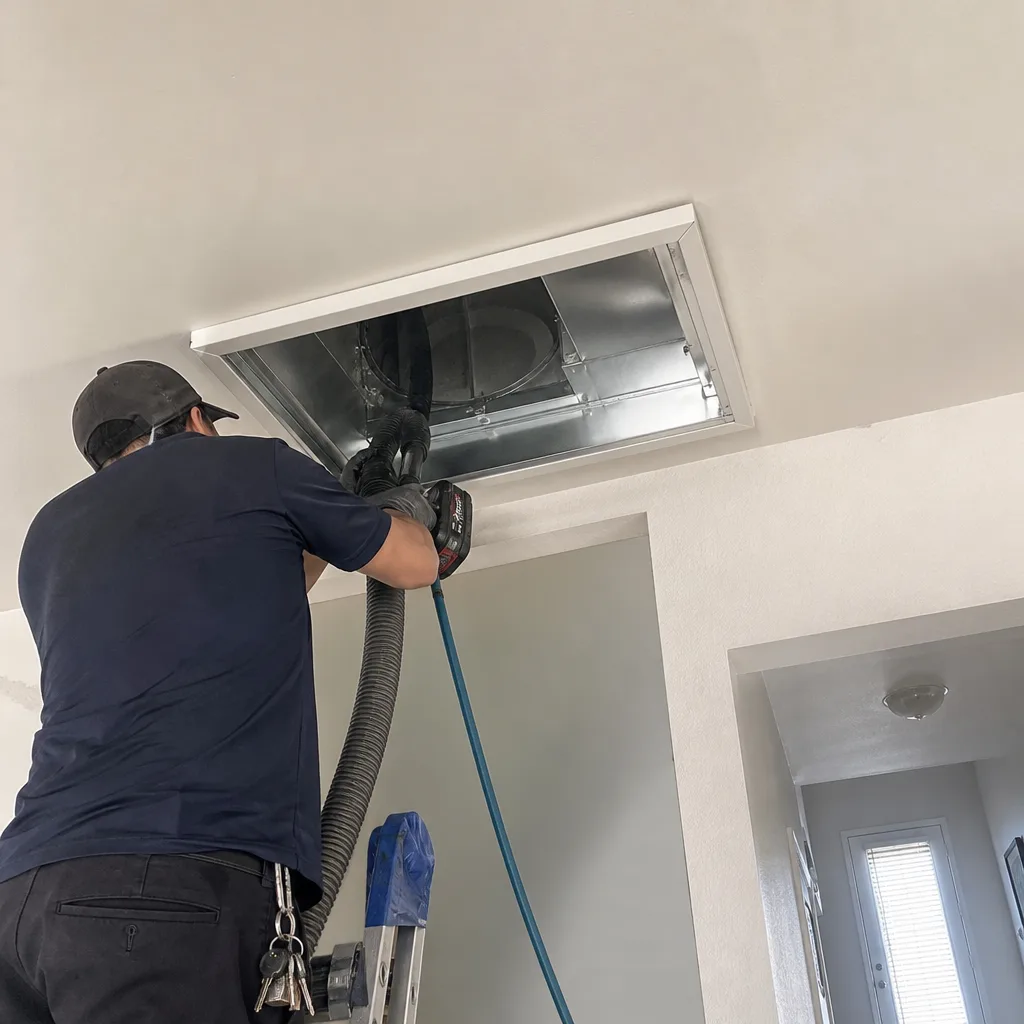 After
After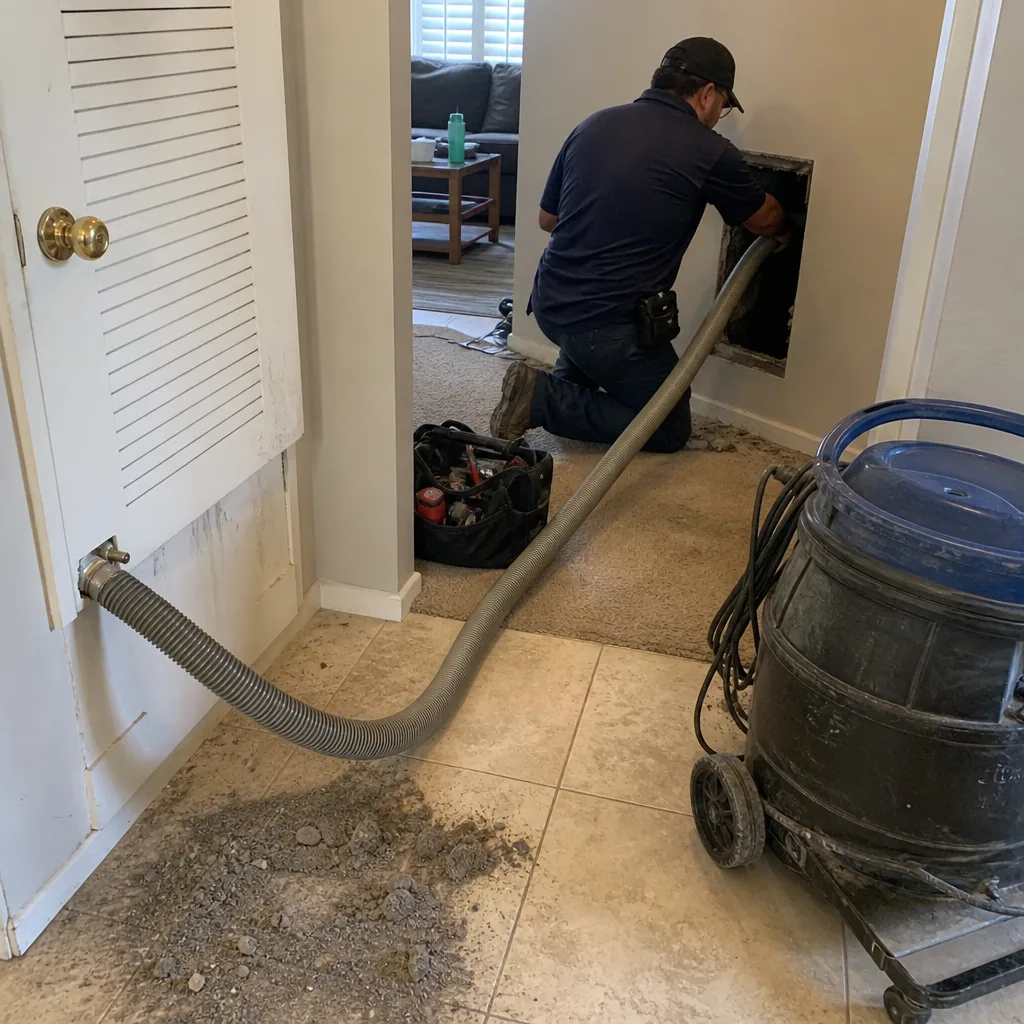 Before
 After
AfterWhen to Call a Professional
Call when the pattern of evidence spans multiple signals: rising kilowatt-hour usage without a temperature explanation, dust returning within days at register faces, and a specific room that will not hold temperature. Call when you see caliche crust inside a return grille or when renovations preceded the onset of symptoms. Call when you need a straight answer about whether the problem is the ducts or the coil, and you want someone who will say so honestly.
Kestrel Air Duct Las Vegas offers free estimates for air duct cleaning in Las Vegas. We are part of the Kingswell family of companies, founded in 2004, and every job operates under the Kingswell Guarantee: a written price before work begins, a defined arrival window, a clean job site, and a written guarantee on the work. If the work falls short within the guarantee period, we return and make it right at no charge. Call (725) 210-0612 and a live person answers, any time of day.
Frequently Asked Questions
Most Las Vegas homes run between $450 and $900 for a complete system cleaning, depending on the number of systems, the size of the home, and the degree of contamination. A home with caliche deposits or post-renovation debris sits at the upper end. Kestrel Air Duct Las Vegas gives a written price before any work begins, and that price is the price. Call (725) 210-0612 for an exact quote, and the estimate is free.
Low quoted prices in this industry are usually a door-opener, not a final price. The technician arrives with a low per-vent figure and then discovers that your system actually needs a more expensive service. Kestrel does not work that way. The written price you hold in your hand before we start is the price you pay, and that is the Kingswell Guarantee on every job.
You should receive before-and-after photos of your own ducts, showing the condition of the interior surfaces at the start and finish of the job. A reputable company documents the work. We take photographs during the cleaning so you can see the difference, and every job is covered by our 365-Day Done Right Promise in writing. If it is not done right, we make it right.
In Las Vegas, most homes benefit from professional cleaning every two to three years. Desert dust, caliche, and construction debris accumulate faster here than in wetter climates, and the constant HVAC runtime means more air moving through the system. Homes with pets, recent renovations, or the spray-foam attic condition described in this guide may need service more frequently.
Yes. Restricted ducts reduce airflow, which means each room receives less conditioned air, which means the system runs longer to hit the thermostat setpoint. The restriction also makes the blower work harder, increasing energy usage. The result is a home that feels warmer and an NV Energy bill that climbs even when the thermostat setting has not changed.
Air duct cleaning addresses the heating and cooling distribution system: supply and return ducts, registers, and the plenum. Dryer vent cleaning in Las Vegas addresses the exhaust path from your clothes dryer to the outside, where lint accumulates and creates a fire risk. They are separate systems, separate services, and both matter in a desert climate. Kestrel offers both.
The Bottom Line
In Las Vegas, the warning signs of dirty air ducts show up earlier in your utility bill and your dust patterns than they do in your nose. Rising kilowatt-hours without a temperature matching the increase, a single room that will not hold temperature, and fine white dust that returns within days of cleaning are the local signals to trust. Caliche-packed return grilles and the 2010 – 2018 spray-foam attic issue add desert-specific layers that most national guides never mention. A duct problem and a dirty coil share symptoms but require different responses, and the technician you call should be honest about which one you have. Kestrel Air Duct Las Vegas delivers that honesty in writing, backed by the 365-Day Done Right Promise. Call (725) 210-0612 for an estimate and a straight answer.
Written by Dale Whitmore, Owner at Kestrel Air Duct Las Vegas, serving Las Vegas since 2004.