
Last updated October 15, 2026
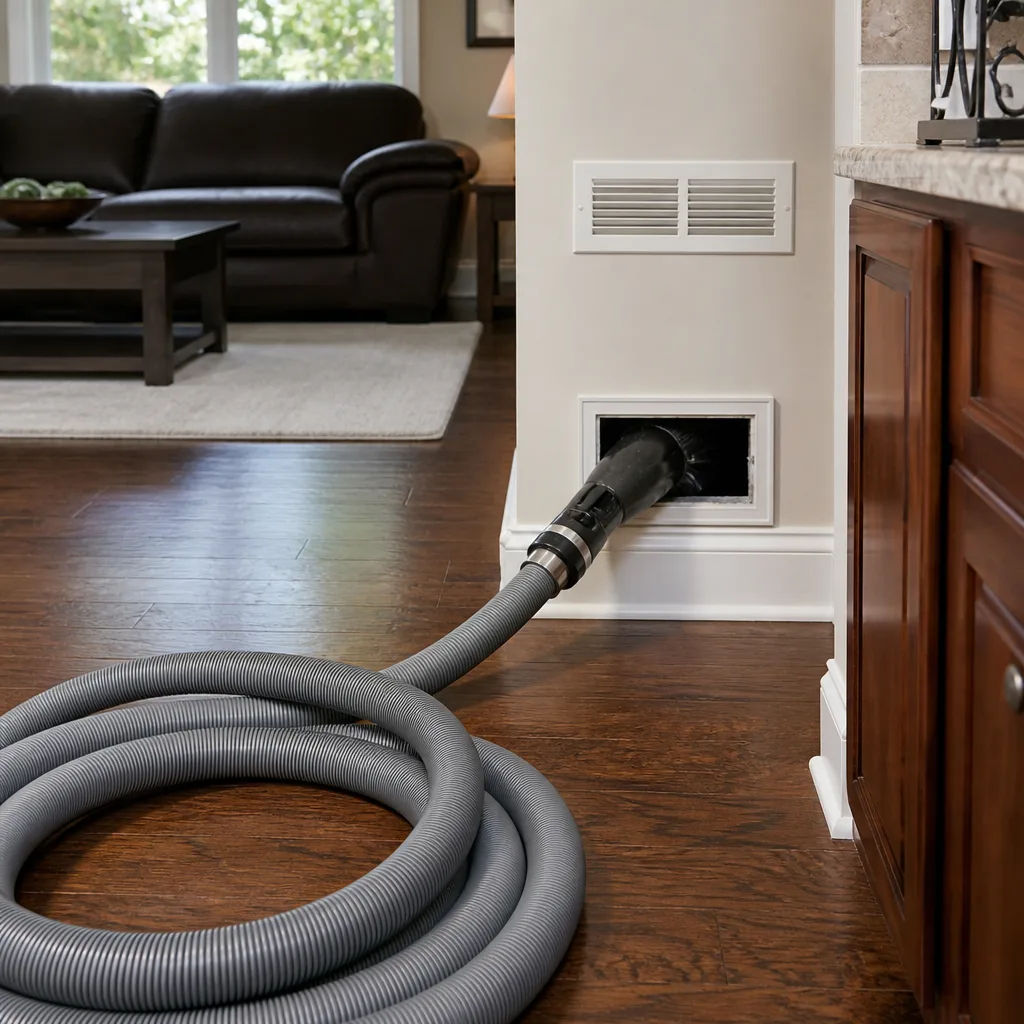 Whole-home duct cleaning
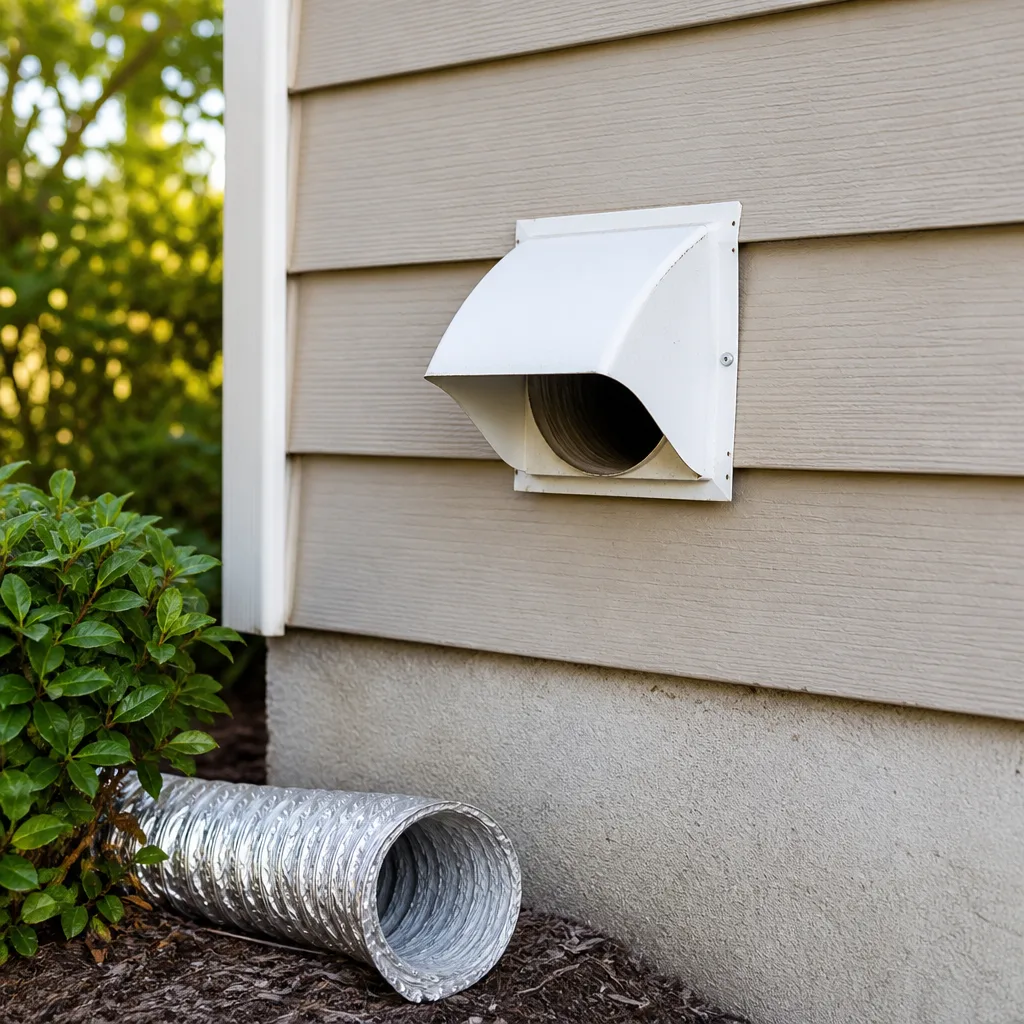 Dryer vent cleaning
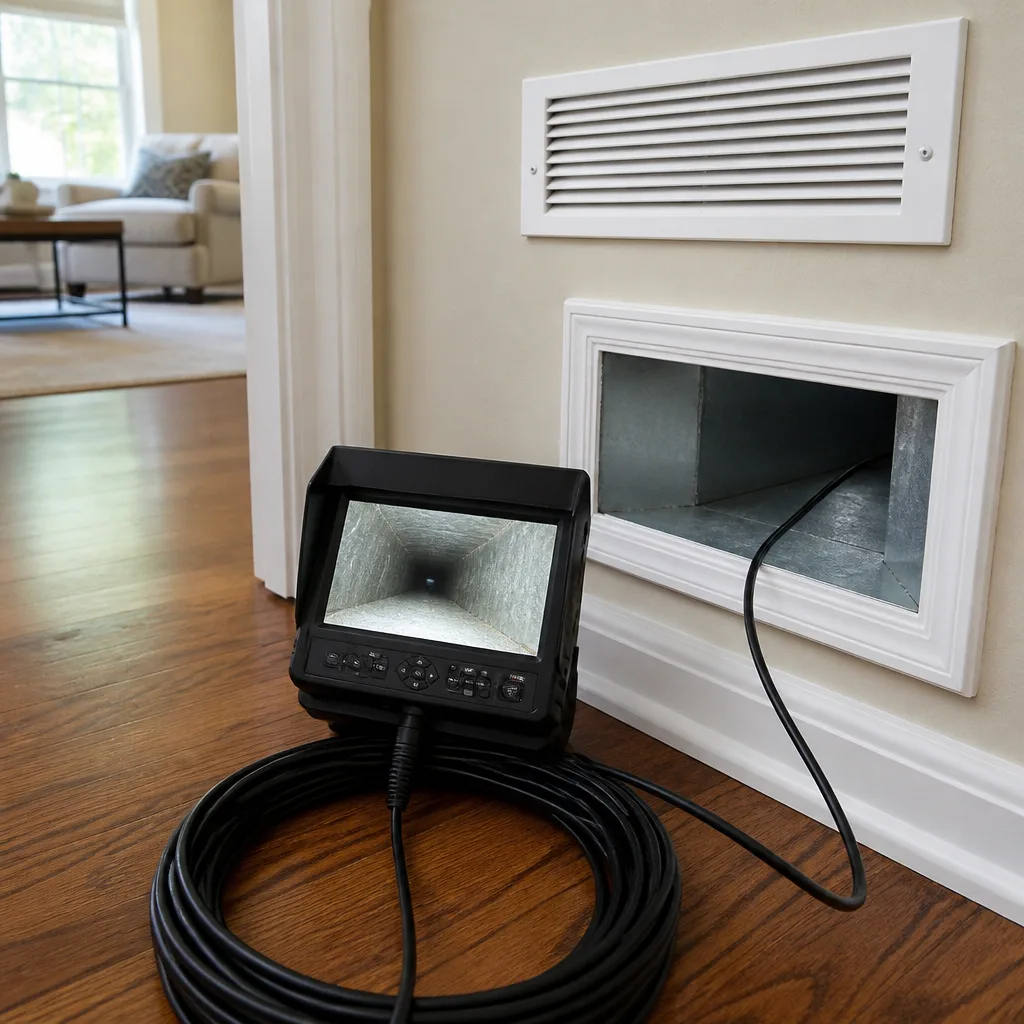 Camera inspection
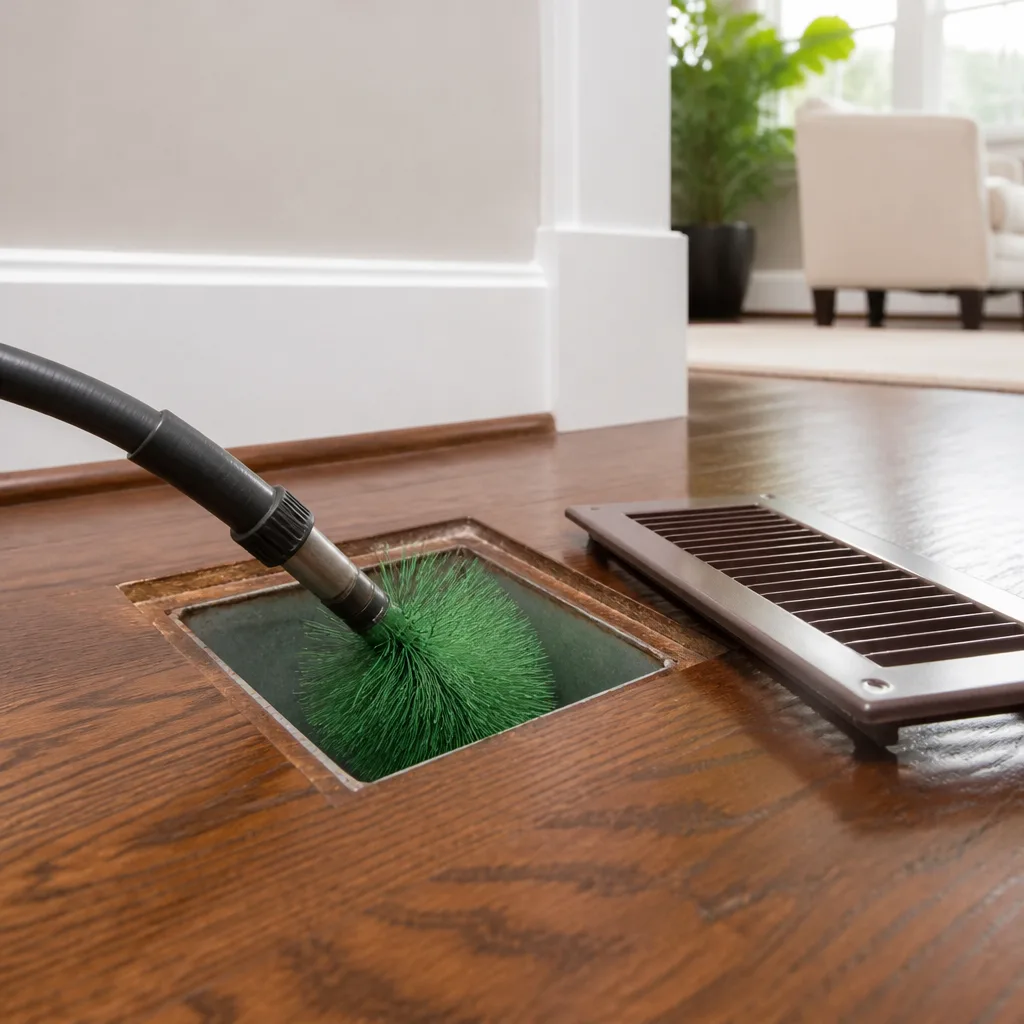 Sanitizing & deodorizing
Whole-system duct and dryer vent check with before-and-after photos - you see exactly what came out of your vents
That "$99 whole-house special" is a bait ad - the real number appears once they are in your hallway, or the "clean" is a shop-vac at the register. We photograph the inside of your ducts before and after instead.
Air Duct Cleaning Permits, Codes & Inspections in NV: What You Need to Know
Here’s what most Las Vegas homeowners don’t realize: the technician standing in your hallway with a rotary brush may be one invoice line away from performing work that requires a Clark County mechanical permit. A straightforward duct cleaning needs no permit. But the moment that visit turns into sealing a breach, replacing a flex duct section, or mounting a UV-C light inside your air handler, you may have crossed from maintenance into regulated mechanical work. This guide maps the exact line between cleaning and modification, explains what Clark County actually requires under current mechanical code, and tells you what your liability looks like if unpermitted work is done on your property. For a deeper look at when cleaning becomes necessary, see our Air Duct Cleaning Warning Signs: A Las Vegas Homeowner’s Reference Guide. By the end, you’ll know when to say yes, when to ask questions, and how to protect yourself in a market where the line gets blurred regularly.
Quick Answer
Standard Air Duct Cleaning services in Las Vegas require no permit, no inspection, and no county filing of any kind, as long as the work is limited to removing debris from existing ducts. A permit becomes necessary when the work modifies, replaces, seals, or adds components to the duct system, including UV-C lights, new duct sections, or permanent sealing materials. The property owner is responsible for permit compliance on their home, and unpermitted mechanical work can surface as a disclosure problem when the house is sold.
Styles & brands we work with
Table of Contents
- What Actually Requires a Permit in Clark County
- Duct Cleaning vs. Duct Modification: Where the Line Sits
- UV-C Light Installation: The Free Add-On That Isn’t
- Who Bears Liability When a Contractor Skips a Permit
- Selling a Home With Unpermitted Duct Work: Disclosure Rules
- How to Request an Invoice That Protects You Later
- Las Vegas-Specific Factors: Heat, Dust, and Duct Wear
- When to Call a Professional
What Actually Requires a Permit in Clark County
Clark County Building Department issues mechanical permits under the International Mechanical Code (IMC), which Nevada has adopted with local amendments. The short version: a permit is required for any installation, alteration, repair, or replacement of mechanical systems. The word “cleaning” does not appear anywhere in the permitting trigger language. That’s the good news for anyone scheduling routine duct maintenance.
The practical threshold in Clark County, as in most Nevada jurisdictions, is scope-based rather than dollar-based. A $199 cleaning visit that only agitates and extracts debris is not a permit event. A $1800 visit that includes sealing a plenum, splicing in new flex duct, or adding an in-duct air purifier is a permit event, because those actions constitute alteration or installation of a mechanical system component. Contractors sometimes describe these actions with words that keep them in familiar territory: “we’ll just patch that separation,” “we’re adding a light to keep the coil clean,” “we’re re-connecting that loose section.” In each case, the plain-language description hides permit-triggering work.
Here’s what Clark County considers permit-required mechanical work, compared to cleaning:
- Duct cleaning (negative-air extraction, brush agitation): no permit. This is maintenance, not modification.
- Air handler or coil cleaning: no permit, as long as no components are removed and reinstalled in a way that alters the system.
- Sealing duct leaks with mastic or aerosol sealant: permit likely required. Duct sealing is classified as alteration or repair, and Clark County’s code interpretation treats it as mechanical work. Some aerosol sealant manufacturers have attempted to classify their process as maintenance; the county has not consistently agreed.
- Replacing a section of flex duct: permit required. That’s installation of new mechanical system material.
- Installing UV-C lights inside the air handler or supply plenum: permit required. This is the one that seems to surprise everyone, and we’ll cover it in detail below.
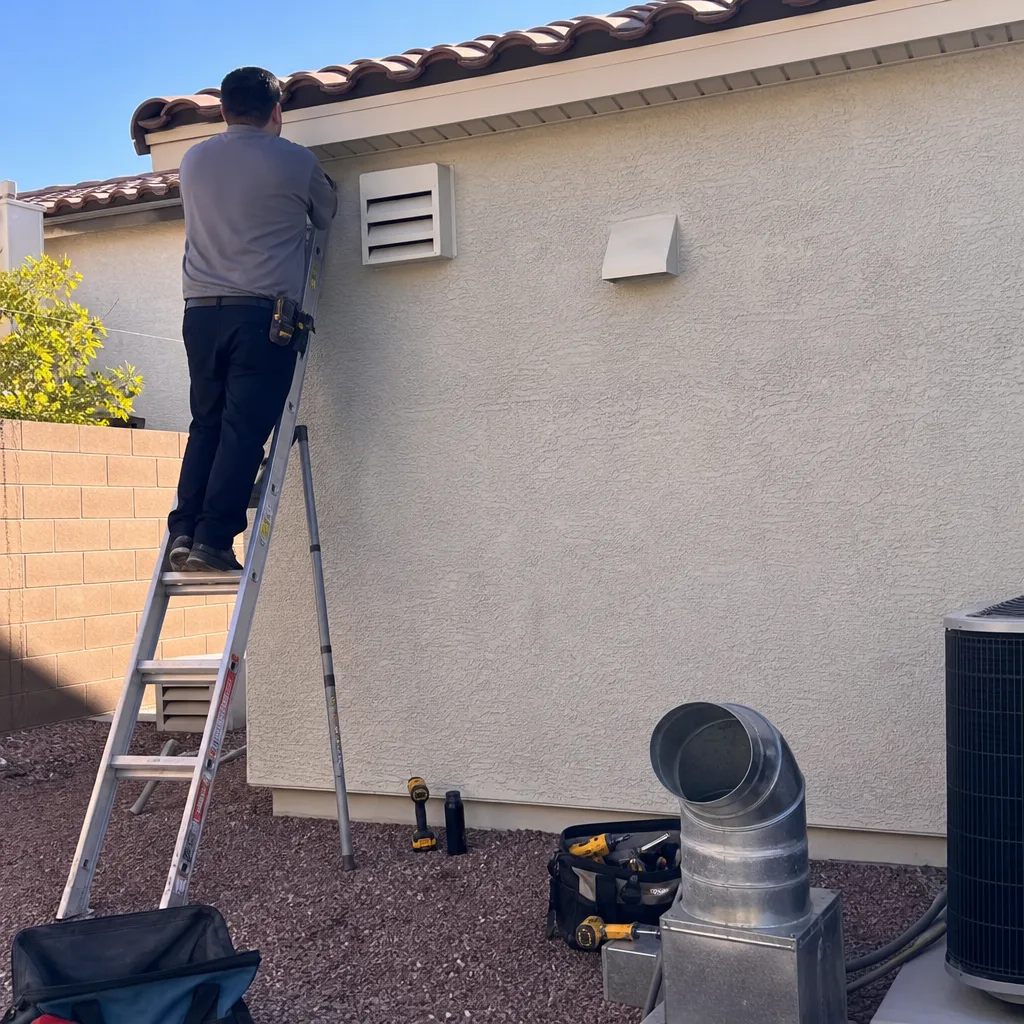
- Repairing a dryer vent transition: generally no permit for reconnecting an existing transition if no new pathway or wall penetration is created. Re-routing a vent through a wall or roof: permit required, because it’s an alteration to the building envelope and exhaust system.
In our experience across Las Vegas, the confusion usually isn’t about a full duct replacement. Homeowners understand that replacing everything is major work. The confusion lives in the middle zone: repairs and add-ons during what was scheduled as a routine cleaning. That’s where the permit conversation either happens or doesn’t, and where the downstream problems start if it doesn’t.
Duct Cleaning vs. Duct Modification: Where the Line Sits
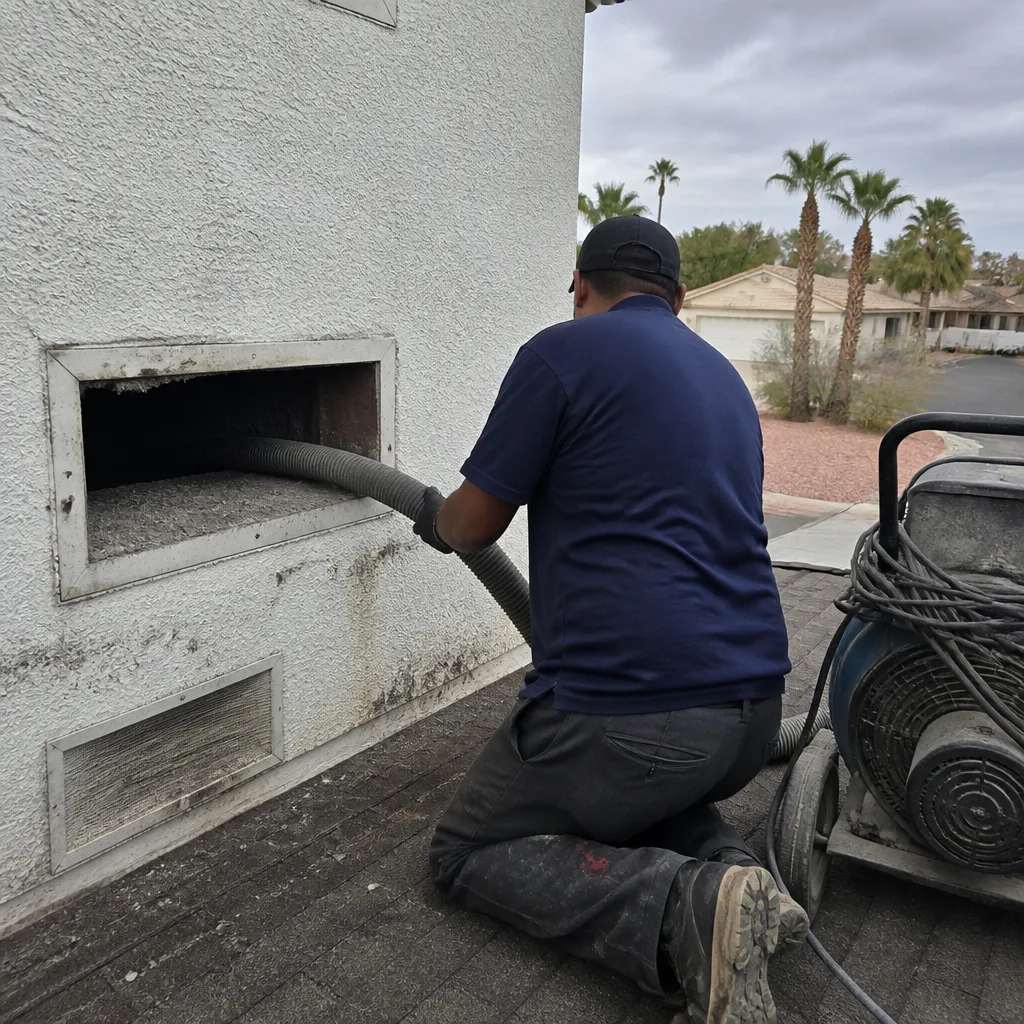
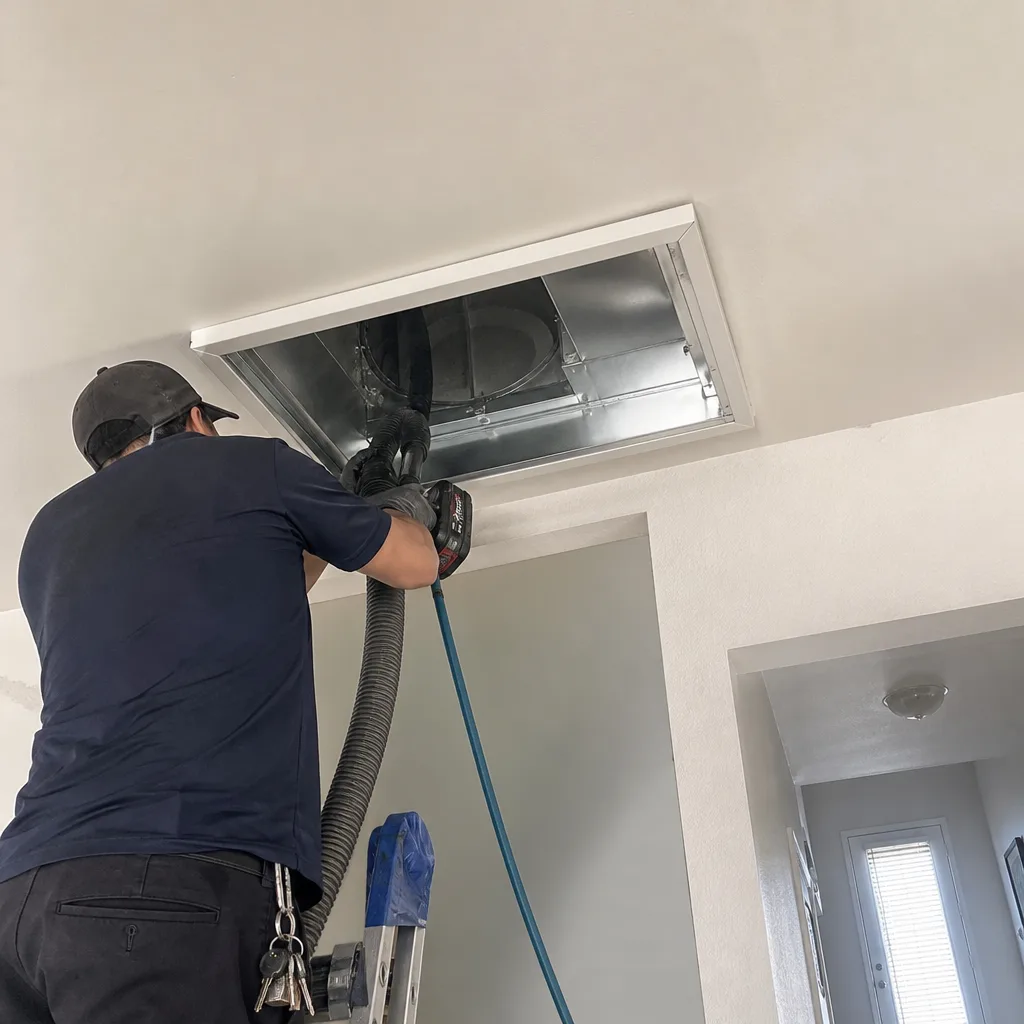
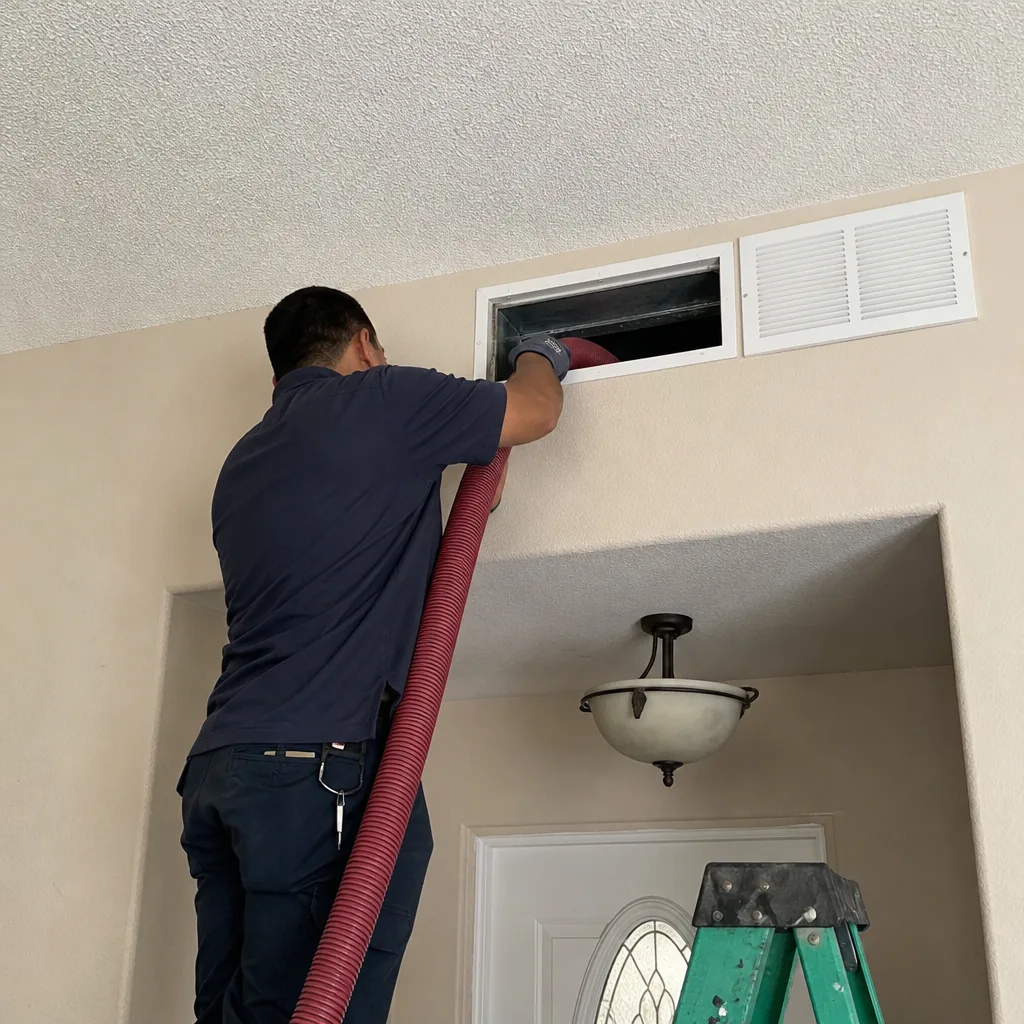
Think of it like washing a car versus replacing the transmission. Washing is maintenance; replacing the transmission is mechanical work. Duct cleaning occupies the washing category. Negative-air extraction, which is the industry term for pulling air backward through the system while a Nikro or similar HEPA-filtered vacuum unit runs outside or at the return, simply removes what’s already in the ducts. Rotary brush agitation, like what a Rotobrush system performs, dislodges debris from the duct wall without changing the duct itself. Neither action alters the system’s design, materials, or connection points.
Modification starts the moment a contractor does any of the following during a visit:
- Seals a separation or breach. Duct mastic, foil tape applied as a permanent seal, or aerosol sealant injected into the system all qualify as alteration. The contractor is changing the system’s condition from leaking to sealed, and Clark County considers that mechanical work requiring inspection.
- Replaces any duct section, collar, or boot. Once a new part enters the system and is fastened in, that’s alteration. It doesn’t matter if the replaced section is three feet of flex duct behind a return grille. New material in the system is the trigger.
- Adds any component to the air stream. This includes UV-C lamps, in-duct air purifiers, booster fans, or damper assemblies that weren’t there before. Installation of new equipment inside the system requires a permit, full stop.
- Changes the physical routing of any duct run. Even if the contractor uses the existing penetrations, re-routing flex duct or hard pipe changes the system’s configuration. That’s alteration.
Here’s the part that matters for Las Vegas homeowners: many contractors in this market will perform these actions on a cleaning visit and describe them as “part of the service” or “a small repair we took care of.” The description doesn’t change the legal classification. And the legal classification doesn’t change based on whether the contractor charged for it separately or bundled it into the cleaning price. If the work happened, the permit requirement attaches to it.
One practical rule we suggest: if the technician’s description of the work includes verbs like “patched,” “replaced,” “sealed,” “installed,” or “added,” ask whether a Clark County permit is being pulled. If the answer is no, ask why not. A legitimate answer might be that the specific action is exempt. But you’ll want that answer documented on the invoice, which we’ll discuss below.
UV-C Light Installation: The Free Add-On That Isn’t
During 2024 and 2025, Clark County Building Department saw a measurable increase in complaints about unpermitted in-duct UV-C germicidal lamps installed by air-duct and HVAC companies during otherwise legitimate service visits. A technician offers the light as a “free upgrade” or “courtesy add-on” after cleaning, and the homeowner accepts. Then the inspector arrives for an unrelated remodel and flags the lamp. The homeowner calls the company, and the company no longer answers.
Clark County classifies in-duct UV-C lamps as mechanical equipment installation. They are not cosmetic fixtures. They mount inside the air handler or supply plenum, draw power from the unit’s electrical circuit, and are subject to the same code provisions as any other system component. A permit is required for the installation, and the installed lamp must be listed for in-duct use. The “free add-on” framing is a sales technique, not an exemption.
Why does this classification matter so much? Three reasons:
- Electrical connection. The lamp taps into your air handler’s power. Any fault in the lamp or its wiring is tied to your HVAC system’s circuit. Unpermitted electrical work inside an appliance is a code violation, and if the lamp causes a failure, your homeowner’s insurer may look at the unpermitted installation before deciding what to cover.
- Listing and placement. UV-C lamps produce ultraviolet radiation. The code requires that any in-duct lamp be listed for that purpose and installed at a location where the radiation cannot escape the duct and contact skin or eyes. A lamp installed at or near a return grille, visible from the living space, violates listing requirements. A permit and inspection catch this; a technician who skips the permit is also skipping the compliance check.
- Resale disclosure. We’ll cover this more in the selling-a-home section, but the short version is that an unpermitted lamp inside the air handler is a material fact on a Nevada seller’s disclosure form. It will surface during a buyer’s inspection.
If a technician offers you a UV-C lamp during a cleaning visit, take the offer in writing: what the unit is, where it will be mounted, who will pull the permit, and when the inspection will occur. If those details are not forthcoming, decline the add-on. The cleaning itself remains valuable. The lamp is where the risk enters.
Who Bears Liability When a Contractor Skips a Permit
Here’s the sentence that every Las Vegas homeowner should write down: liability for unpermitted work follows the property, not the contractor. When a company performs mechanical work without a permit and the problem surfaces years later, the company may be out of business, may have changed names, or may simply refuse to answer. The permit liability remains attached to your address. Clark County’s enforcement path runs through the property owner, not the departed contractor.
That liability takes several forms:
- Code enforcement. If the county learns of unpermitted work, either through a complaint or an inspection triggered by another permit application, the property owner receives the correction notice. The notice requires either retroactive permitting or removal of the unpermitted work. Retroactive permitting means opening walls or ducts for inspection, paying permit fees plus penalties, and often hiring a licensed contractor to certify the work.
- Insurance. If a fire or water event originates from unpermitted mechanical work, the insurance claim process becomes adversarial. Most Nevada homeowner’s policies exclude coverage for losses caused by illegal or unpermitted construction. The insurer’s adjuster is trained to look for the permit record. No record, and the claim is in jeopardy.
- Resale. Buyers’ inspections in Las Vegas routinely flag visible unpermitted work. The seller then negotiates from weakness: either remediate before closing or reduce the price. In a fast-moving market like Las Vegas, a flagged permit issue can knock $5,000 to $15,000 off a transaction, depending on the work involved.
- Personal injury. If an unpermitted installation injures someone, the owner’s liability exposure expands beyond code compliance into tort territory. The contractor’s liability insurance may not respond to work performed without a permit, leaving the property owner’s policy and personal assets as the target.
This is not theoretical. In our experience serving Las Vegas homes since 2004, we’ve been called to remediate unpermitted duct modifications performed by other companies multiple times. The homeowner’s story is almost always the same: the original contractor described the work as “part of the cleaning,” never mentioned a permit, and stopped answering calls when the problem emerged. By the time we arrive, the owner has already spent money on a failed repair and is now facing the County’s correction requirements.
Selling a Home With Unpermitted Duct Work: Disclosure Rules
Nevada’s seller disclosure requirements, codified in NRS 113, obligate sellers to disclose material facts about the property that the seller knows about and that would affect a buyer’s decision. Unpermitted mechanical work fits squarely inside that obligation. The seller must disclose it. Failing to do so exposes the seller to a post-closing lawsuit for fraudulent concealment, which carries damages beyond the cost of the repair.
The disclosure form used in most Las Vegas transactions includes a section on permits and work performed. If the seller knows that a UV-C lamp was installed without a permit, or that a flex duct section was replaced during a cleaning visit without county approval, the seller is legally obligated to disclose that fact. The result is predictable: the buyer asks for the work to be permitted retroactively before closing, or asks for a price reduction to cover the cost of doing so.
Even without the seller’s knowledge, the issue surfaces during the buyer’s home inspection. A competent inspector in Clark County will:
- Compare visible duct work against any permit records pulled for the property.
- Flag new-looking components (flex duct, sealing mastic, UV-C lamps) that appear newer than the permitted work history suggests.
- Recommend that the buyer ask the seller for documentation of any mechanical work performed during ownership.
- In some cases, recommend a dedicated HVAC inspection in addition to the general home inspection.
The practical lesson for a Las Vegas homeowner considering duct services: if you plan to sell within the next five to seven years, the permit question is a seller-side issue on the day the work is performed, not later. Addressing it at the time of service costs a few hundred dollars in permit fees. Ignoring it and discovering it at the closing table costs a multiple of that.
How to Request an Invoice That Protects You Later
The invoice is the single most under-appreciated document in residential duct service. Most homeowners glance at the total and file the paper. But the invoice is the narrative of what happened, written by the contractor, signed by the homeowner’s payment. If that narrative is inaccurate, it becomes the homeowner’s problem later. Here’s what to ask for, in plain terms.
First: exact scope language. The invoice should describe the work performed in language that matches what actually happened. “Duct cleaning – full system negative air extraction and brush agitation” is accurate for a cleaning. “Duct repair – sealed leak and replaced flex section” is accurate for modification work. What is not acceptable is a cleaning invoice that quietly includes the word “sealed” or “replaced” buried in line-item text, or a modification invoice that describes the work only as “cleaning.”
Second: a separate line for any permit-related work. If the visit included modification, the invoice should show it as a line item, and it should reference the permit number if a permit was pulled. If no permit was pulled and the work clearly required one, the invoice becomes the documentation of an unpermitted alteration. You’d want that corrected before work proceeds, not after your payment clears.
Third: a materials list. If anything was added or replaced, the invoice should list the specific materials: manufacturer name, model number where applicable, and quantity. A UV-C lamp’s listing number, for example, matters to a future buyer’s inspector. “Installed UV light” is not a materials list. A line that says “installed [manufacturer] model [number] in-duct UV-C lamp on supply plenum” is.
Fourth: the company’s license number. In Nevada, contractors performing mechanical work must hold a Nevada State Contractors Board license with the appropriate classification. The license number should appear on every invoice. If it doesn’t, ask for it. An unlicensed contractor performing permit-required work compounds every liability problem.
If a contractor resists documenting the scope accurately, treat that as the red flag it is. No legitimate company has a reason to obscure what it did on your property. The written price and the written scope go together. Our company puts the price in writing before work begins, and the invoice afterward describes exactly what was done in plain language for precisely this reason: the customer should be able to hand that paper to a home inspector five years later and have it make sense.
Las Vegas-Specific Factors: Heat, Dust, and Duct Wear
Las Vegas presents a specific set of conditions that shape both how often duct work needs attention and what kinds of damage accumulate. The Mojave’s fine alkaline dust penetrates homes through every imperfect seal and accumulates inside duct runs faster than in most markets. Summer temperatures push attic spaces above 140°F, which degrades flex duct’s outer jacket and accelerates the failure of tape seals. The dry air, combined with evaporative cooling in older homes, creates condensation conditions at the plenum and coil that promote biological growth in ducts that never dried completely.
These conditions mean that Las Vegas homeowners live with a higher baseline level of duct degradation than, say, a homeowner in a coastal climate. That produces more situations where a cleaning visit turns into a repair conversation. A technician doing a standard negative-air extraction finds a flex duct section that’s collapsed or separated, and suddenly the scope has changed. That’s not necessarily a dishonest escalation; it’s often a genuine finding. The problem is how the finding gets handled.
In our work across Las Vegas since 2004, we’ve seen three patterns in how companies respond to climate-driven duct damage discovered during cleaning:
- The transparent response: “We found a separated flex duct section. Here’s what it looks like. This is a repair that requires a permit under Clark County code. Here’s the written price and the permit process.” This is the right answer.
- The blurred response: “We went ahead and re-attached that for you.” No permit mentioned, no price given before the work, and the invoice says only “cleaning.” This is the common answer, and it leaves the homeowner with unpermitted alteration work on the books.
- The upsell response: “Your whole system needs replacing.” Sometimes true after 15 or 20 years of Las Vegas heat. Sometimes an attempt to turn a $400 cleaning into a $12,000 replacement. The pattern is detectable when the same company quotes a system replacement on every home with visible aging, regardless of function.
The Las Vegas climate is hard on duct work in ways that make repair conversations more frequent here than elsewhere. That’s exactly why the permit distinction matters more in this market. The same conditions that damage ducts also create the situations where contractors cross the line into permit-triggering work, and the homeowner is the one holding the liability when they do.
When to Call a Professional
You need a licensed, permitted professional when the scope moves from cleaning into modification of any kind. That means sealing work, duct section replacement, UV-C installation, in-duct component additions, or any alteration to the system’s routing or connections. You also want a professional who will document the permit status of the work before it starts, not one who discovers the permit question after the fact. In Las Vegas, the difference between a clean permit history and an unpermitted modification is the difference between a smooth closing and a negotiated price cut on the day you sell your home. Kestrel Air Duct Las Vegas home offers free estimates in Las Vegas; call (725) 210-0612 for a written price and a straight answer on what your job needs.
See the difference
 Before
 After
After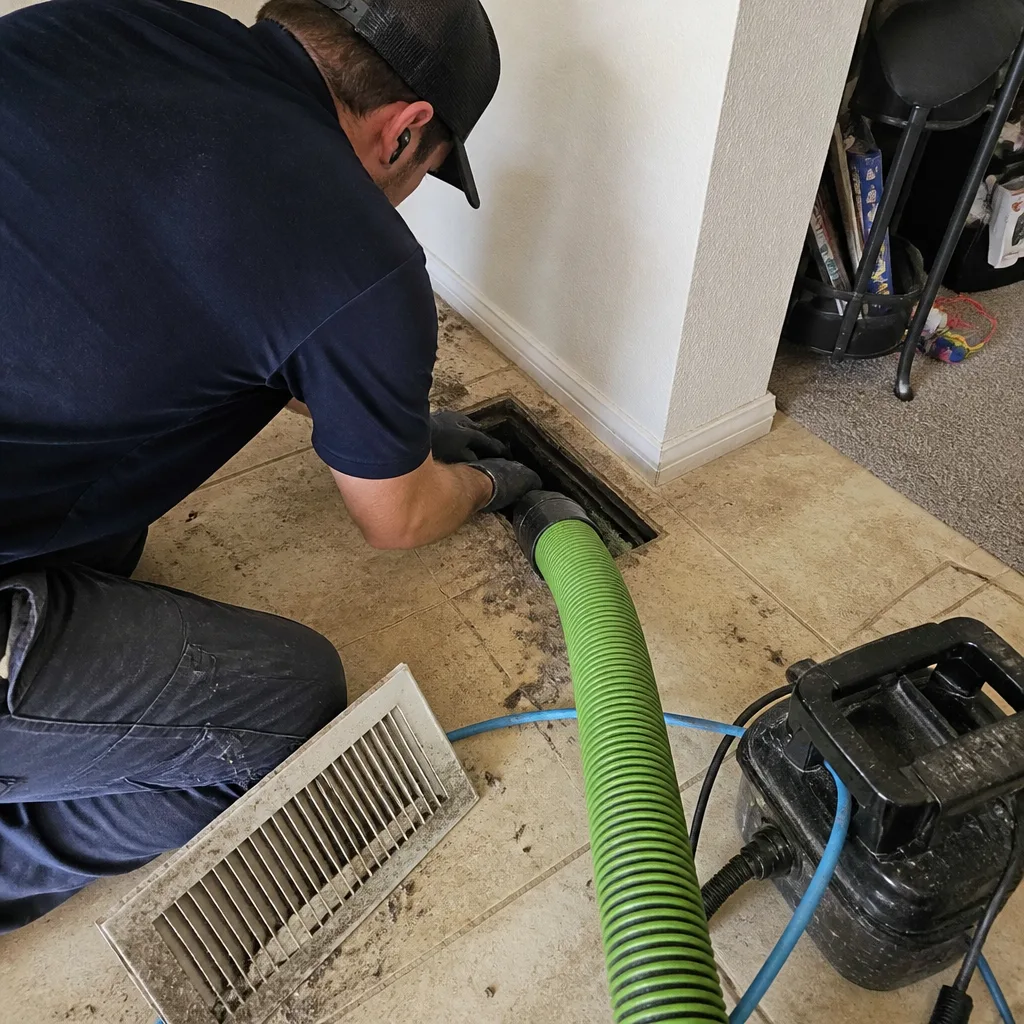 Before
 After
After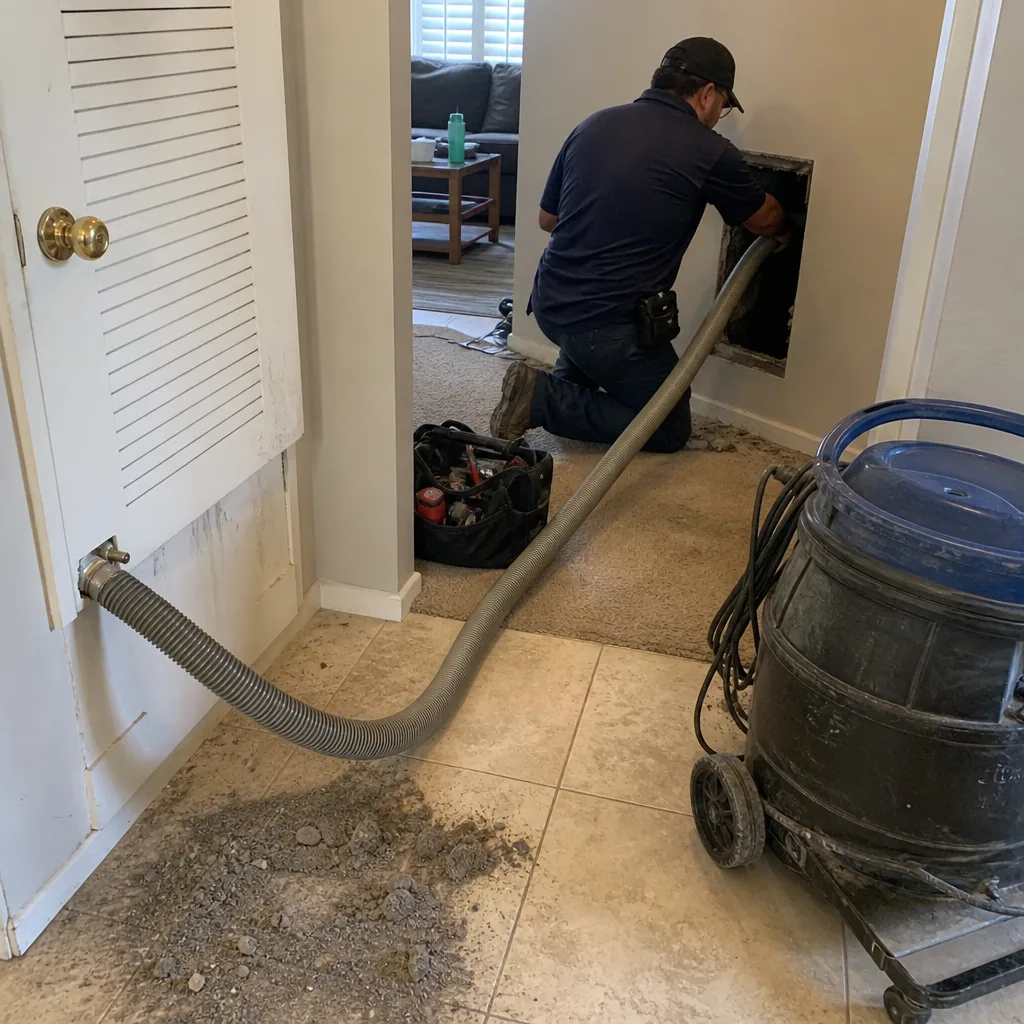 Before
 After
AfterCommon Mistakes to Avoid
- Accepting a “free UV light” without asking about the permit. The lamp installation is mechanical work. If the permit isn’t pulled, that free add-on becomes a liability that follows your property.
- Paying an invoice that says only “cleaning” when repair work was performed. The invoice is your record for future disclosure and resale. If it doesn’t describe the work accurately, you’ve accepted a document that misrepresents what happened on your property.
- Assuming the contractor’s license protects you. The license protects the contractor’s right to work. It doesn’t shield you from code enforcement for unpermitted work on your property. Enforcement follows the address.
- Believing that dollar value determines permit requirements. Clark County’s trigger is scope, not price. A $120 UV lamp installation can require a permit while a $2,000, 8-hour cleaning does not.
- Skipping the scope question during the walkthrough. Ask before the work starts: “Is any of this going to require a county permit?” Get the answer before the technician opens a tool bag, not after the work is done.
- Treating unpermitted work as a distant problem. It surfaces at the worst moments: when you’re selling, when an insurance claim is pending, or when another contractor’s permit application triggers an inspection of the property. The cost to fix it then is higher than the cost of doing it right on the day of service.
Frequently Asked Questions
No. Standard air duct cleaning that uses negative-air extraction and brush agitation requires no permit in Clark County, because it removes debris from existing ducts without altering the system. The permit trigger appears when the visit includes modification work like sealing, section replacement, or component installation. If your cleaning visit includes any of those actions, ask whether a permit is being pulled before the work proceeds.
Most homes in Las Vegas run between $400 and $900 for a full-system cleaning, depending on the number of returns and supplies, the home’s square footage, and the degree of buildup. Homes with significant debris accumulation or multiple systems fall at the higher end of that range. The key is getting a written price before work begins so the number doesn’t change when the technician arrives. Call (725) 210-0612 for an exact quote on your home.
Likely yes. In Clark County, duct sealing is classified as alteration or repair and falls under the mechanical permit requirement, even when performed as part of a broader cleaning visit. Some aerosol sealant processes are marketed as maintenance, but the county has not uniformly adopted that interpretation. Confirm permit status with your contractor in writing before any sealing work begins.
The unpermitted work remains a liability attached to your property. Clark County can issue a correction notice requiring retroactive permitting, your homeowner’s insurance may decline claims involving that work, and the issue will surface as a disclosure item if you sell. The contractor’s disappearance doesn’t eliminate your responsibility. Call (725) 210-0612 if you need a straight answer on what was done and what’s required to fix it.
No. A UV-C lamp installation is a separate mechanical installation requiring its own permit in Clark County. The cleaning company’s visit does not carry a blanket permit that covers add-on work. Ask for the lamp’s listing information, the permit number, and the inspection date before agreeing to installation. A company that can’t provide these details shouldn’t be performing the work.
In the Las Vegas market, most homes benefit from cleaning every three to five years, with homes near construction zones, homes with pets, and homes with high desert dust exposure at the shorter end of that range. The Mojave’s fine dust accumulates faster than in most climates, and Las Vegas attics accelerate duct degradation. If you’ve never cleaned the ducts in a home you’ve owned for seven years or more, a professional assessment is overdue. Air Duct Cleaning in Las Vegas covers what a proper cleaning entails.
No, provided the vent pathway and termination are not altered. Cleaning the existing dryer vent, including the lint trap bypass and the full run to the exterior wall cap, is maintenance and requires no permit. If the vent is re-routed through a wall or roof, or the termination is relocated, that’s an alteration and a permit is required. Dryer Vent Cleaning in Las Vegas offers more detail on what a thorough vent cleaning includes.
The Bottom Line
Standard air duct cleaning in Las Vegas needs no permit. The line gets crossed when cleaning becomes modification, and that’s where Clark County’s mechanical code applies and where homeowner liability begins. Sealing, replacement, and UV-C installation are the three most common situations where contractors blur the line during an otherwise routine visit. The protection is simple: get the scope in writing before work starts, confirm permit status for any modification work, and keep an invoice that accurately describes what was done. The cost of asking those questions on the day of service is zero. The cost of discovering unpermitted work later is measured in thousands, and it stays with your address long after the contractor has moved on. Call (725) 210-0612 for a free estimate and a straight answer on what your home actually needs.
Written by Dale Whitmore, Owner at Kestrel Air Duct Las Vegas, serving Las Vegas since 2004.